
By Zack Glaunert
Pheasants Forever Farm Bill Biologist Houston County
In recent years, there has been growing awareness on certain invasive plant species that have been encroaching upon our landscapes. Some of you may be familiar with the species in this article. Some of you may have already had the pleasure of combatting one or all of these species, and know just how detrimental they can be to our landscapes. Some of you may have had encounters with these species and simply were not sure what you were looking at. Below are six species that have been moving in and have become problematic to our ecosystem. This is not an in-depth dive into these species but an overview on each of them, along with a few tips on how to identify them for the next time you are out perusing the land.
Common Buckthorn (Rhamnus cathartica)
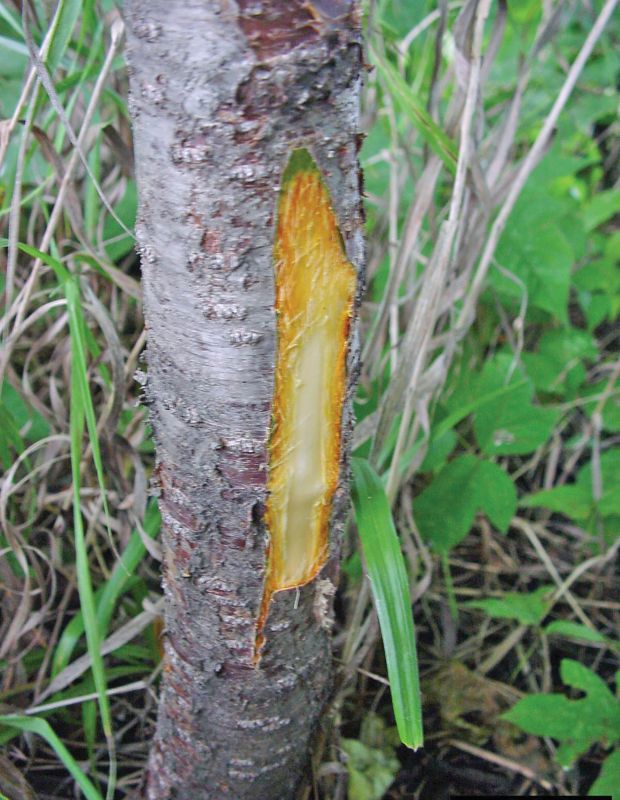
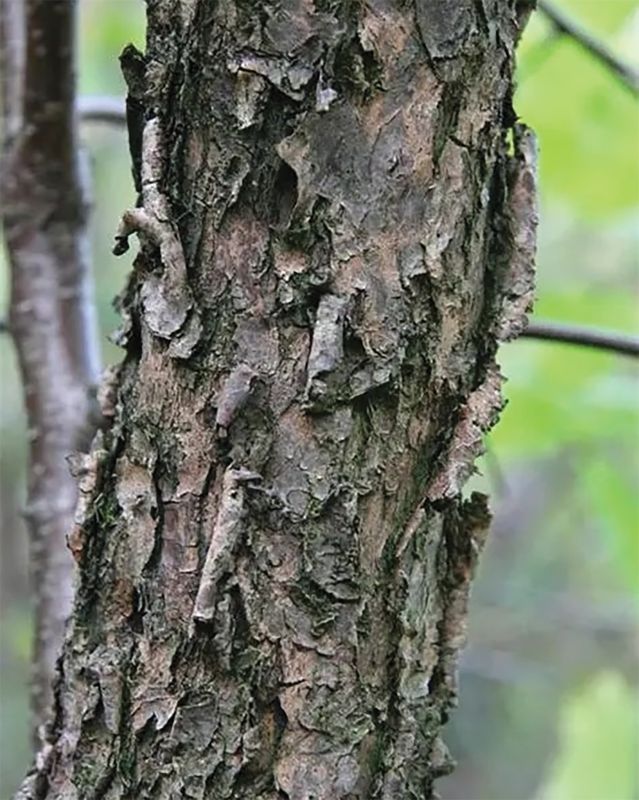
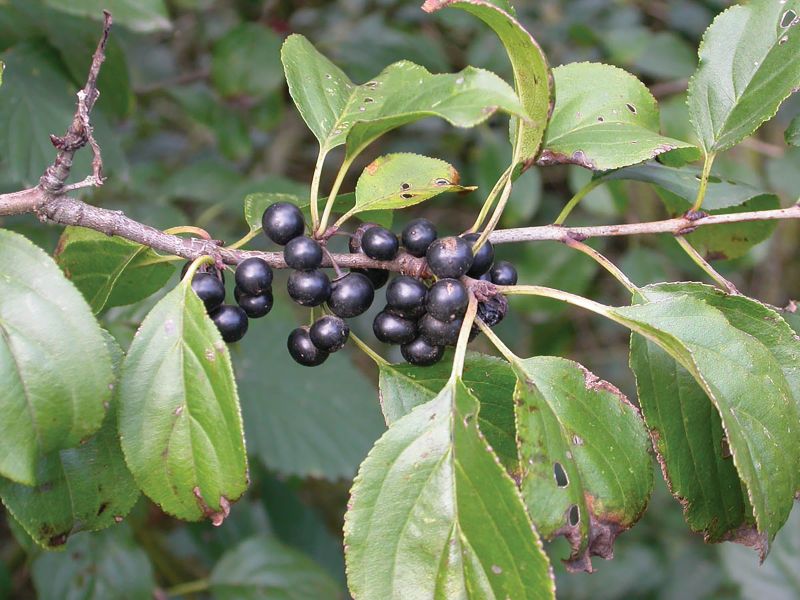
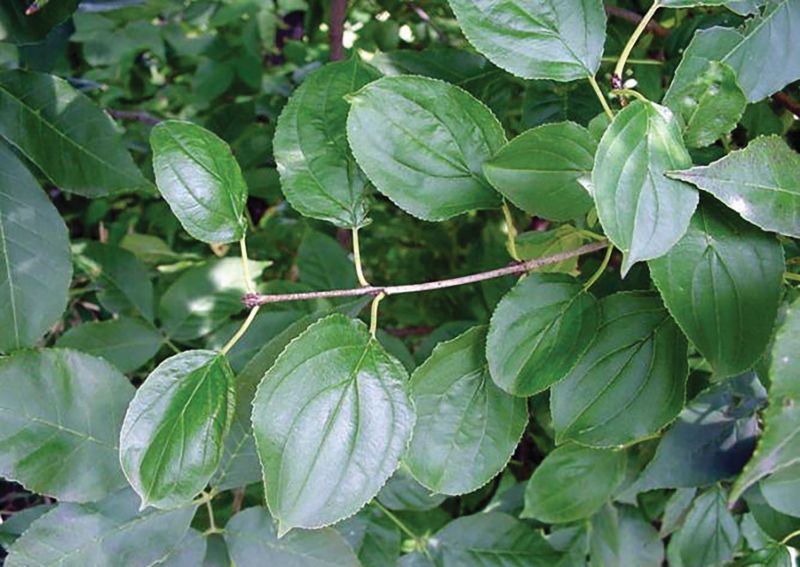
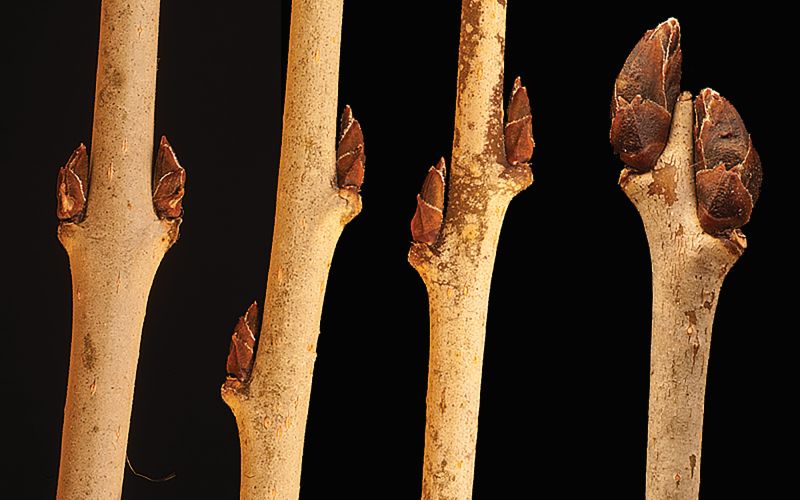
Native to Europe, Common Buckthorn has become a common issue for landowners all over the state, in the past decade or so. This tall understory shrub (up to 25 feet tall) grows in dense thickets, which shade out native understory species, in most cases leaving only bare soil beneath. This can lead to erosion issues, decreased habitat for native animal/insect species and conditions for native plant species. It spreads quickly due to its prolific berry production, with each berry containing up to four seeds. The seeds create a laxative effect on the birds that consume them, which leads to increased rate of spread. It is worth noting, that Common Buckthorn is the overwintering host species for Soybean Aphids. Buckthorn can resemble native cherry and plum species, so it is important to make sure to identify them correctly. Below are some ways to identify this species.
Methods of Identification:
Bark: Gray or dark brown. Appears black and shaggy the older the shrub gets.
Sapwood: If you scrape away the outer bark, the inner sapwood is orange in color.
Leaves: Leaves are a dark glossy green, often staying green late into fall.
Buds: Slightly offset, brown, resembles a deer hoof. Buds at the end of branches have thorn protruding from between the buds.
Berries: Dark purple clusters.
Non-native Bush Honeysuckle
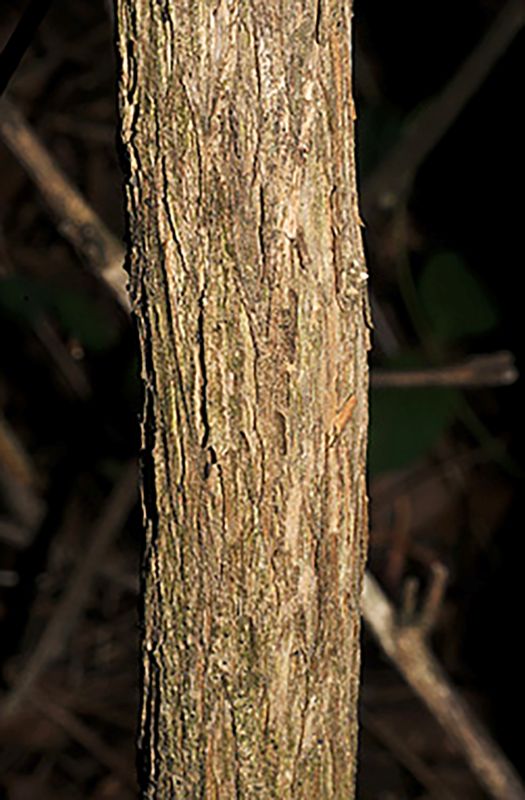
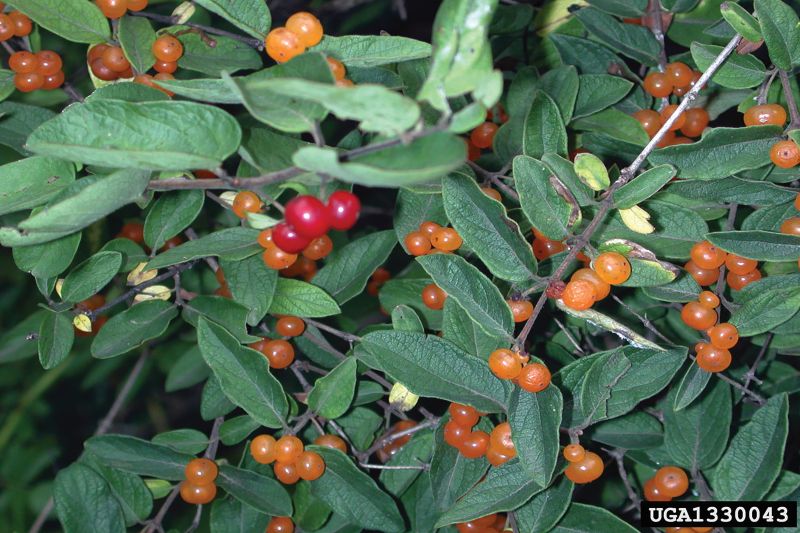
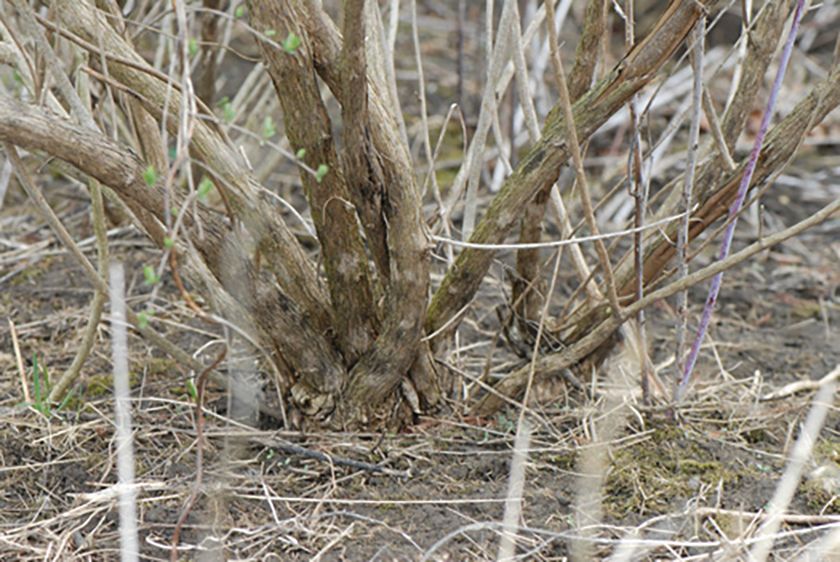
There are four types of non-native honeysuckles in Minnesota: Tartarian, Morrow’s, Bell’s (hybrid of Tatarian and Morrow’s) and Amur honeysuckle. The differences are hard to distinguish, but most easily determined by differences in flower color. These multi-stemmed shrubs are native to eastern Asia and grow up to 15 feet tall. Much like Buckthorn, they grow densely, shade out native plant species in the understories of woodlands, and often found densely populated along fence lines. The berries contain multiple seeds each, which help this species spread quickly. Listed below are some identifiers of honeysuckle.
Methods of Identification
Bark: Light gray and often shaggy.
Stems: Multi-stemmed. Mature stems are often hollow.
Leaves: Oval and smooth. They leaf-out in early spring and stay green later into fall.
Berries: Small red to orange and often grow in pairs.
Multiflora Rose (Rosa multiflora)
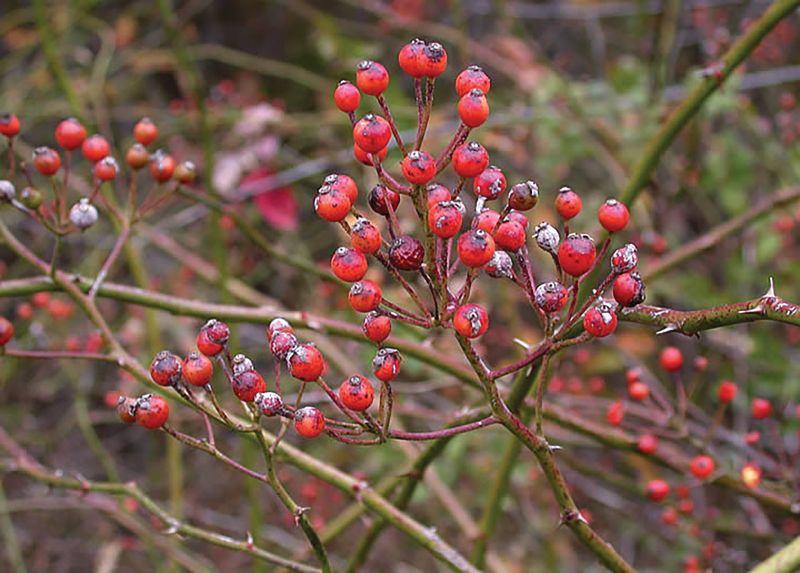
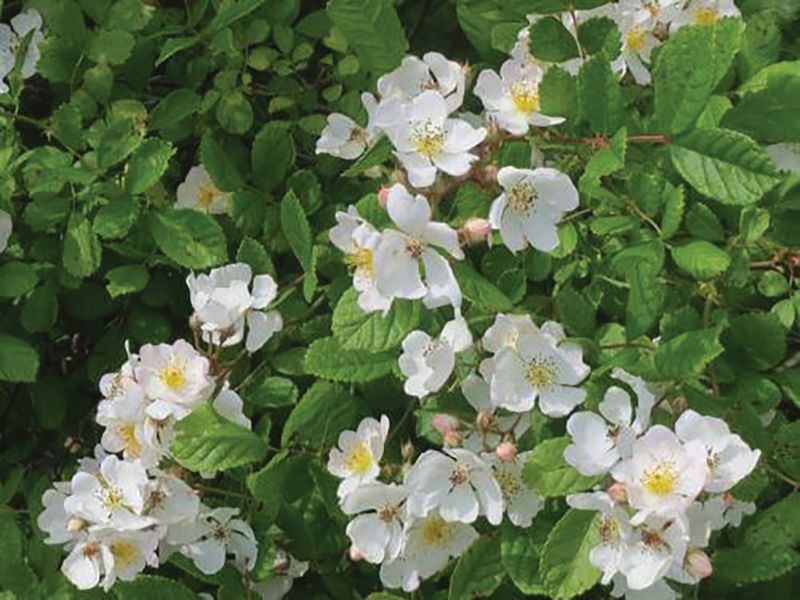
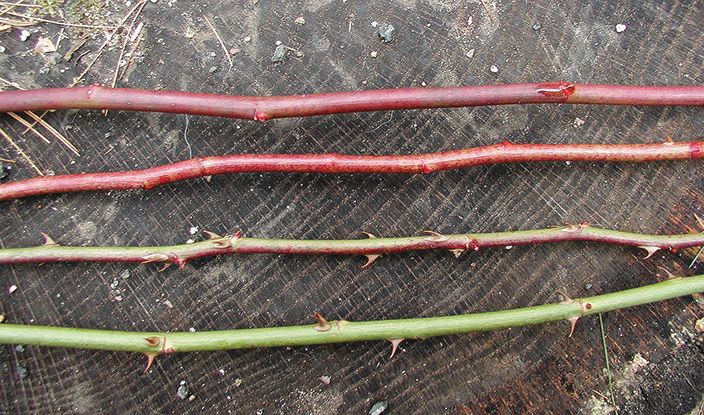
Multiflora Rose is one you will not forget if you have made contact with, due to its nasty thorns. A perennial shrub, native to eastern Asia, that can grow up to 13 feet tall and 13 feet wide. It can grow densely, making navigating stands of them difficult. It also outcompetes native vegetation in the areas it grows. It can be found in just about any setting, from wooded areas to open pasture and fence rows. Mature shrubs have arching stems covered in sharp thorns. It produces reddish brown fruits that contain the seeds, which are consumed and spread by birds. Each plant can produce up to 500,000 seeds per year. They can also spread by vegetative means, when arching stems reach the ground they take root. The plants are much more noticeable in May-June when they are flowering. The flowers petals are white, sometimes with a slight pink hue. Below are some ways to identify this plant.
Methods of Identification
Stems: Green to Reddish with medium to large thorns.
Leaves: Five to 11 leaflets on each leaf.
Berries (Rose hips): Bright red.
Flowers: Five white petals, blooming in May-June.
Japanese Barberry (Berberis thunbergii)
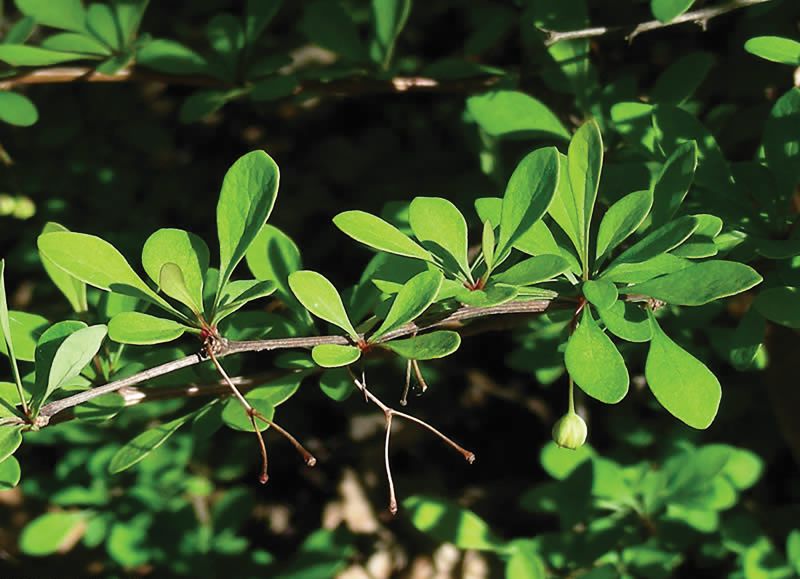
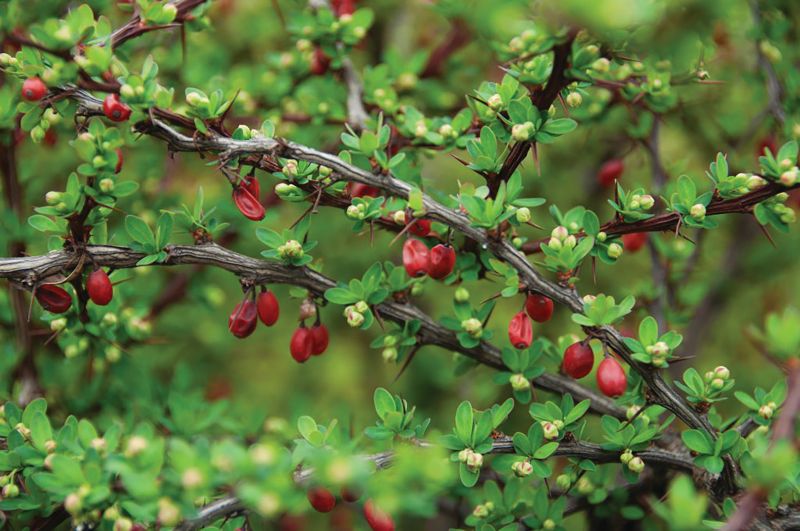
This small to medium shrub can grow 3-6 feet tall. It has slightly arching stems that are covered in clusters of leaves and spines. Once established in an area, it can become very dense, outcompeting native vegetation and taking over the understory. It has glossy green leaf clusters that burn a reddish brown in the fall. The plants produce red berries that are spread about by animal/bird consumption. These berries will appear on the plants in late summer and will hold them throughout winter. Areas with dense stands of Japanese Barberry often see increased numbers of ticks. Can sometimes be confused with native Gooseberry species, but they have quite different leaf shape. Some identifying characteristics listed below.
Methods of Identification
Stems: Thin, slightly arching, full of spines.
Leaves: Glossy green in the spring/summer, reddish brown or purple in the fall before dropping, Clusters.
Berries: Round to egg shaped, bright red.
Japanese Knotweed (Fallopia japonica)
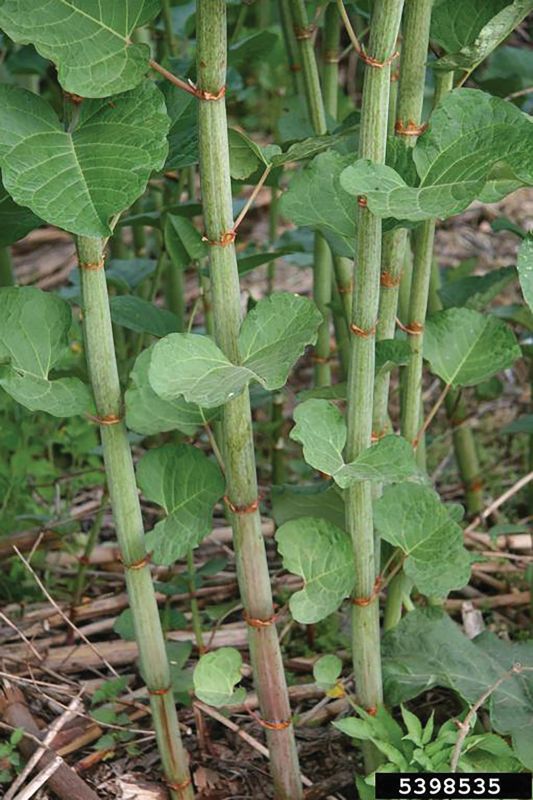
Japanese Knotweed is an invasive weed that spreads rapidly. It has expansive root systems that allow it to spread new shoots at great rates. Grows very densely, which shades out and out competes native vegetation and trees. Found in woodlands, ditches, grasslands and flood plains. This weed is relatively easy to identify, as the stems resemble bamboo. The stems are typically green with reddish purple spotting. The leaves are large and somewhat spade or heart shaped. As the plant withdraws in the winter, the stems (canes) become woody and the leaves turn a golden brown.
Methods of Identification
Stems: Bamboo-like, red or purple spotting.
Leaves: Large, spade or heart shaped.
Round Leaf Bittersweet (Celastrus orbiculatus)
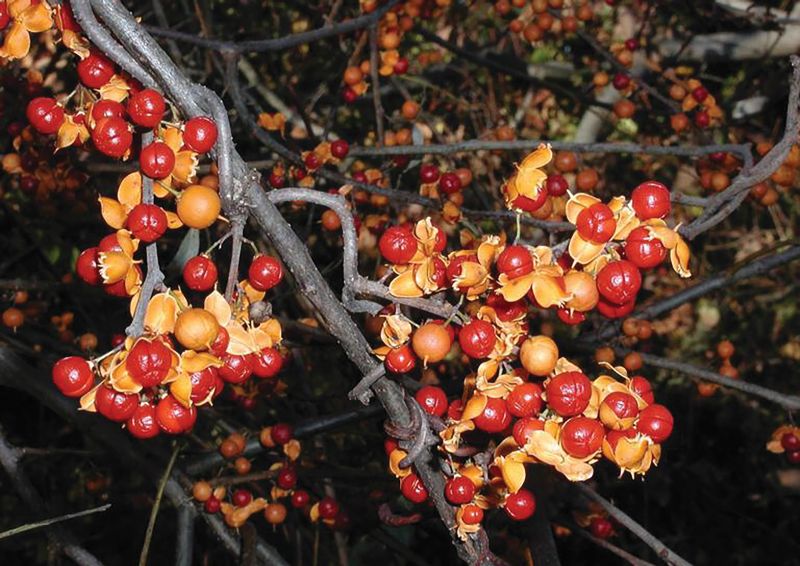
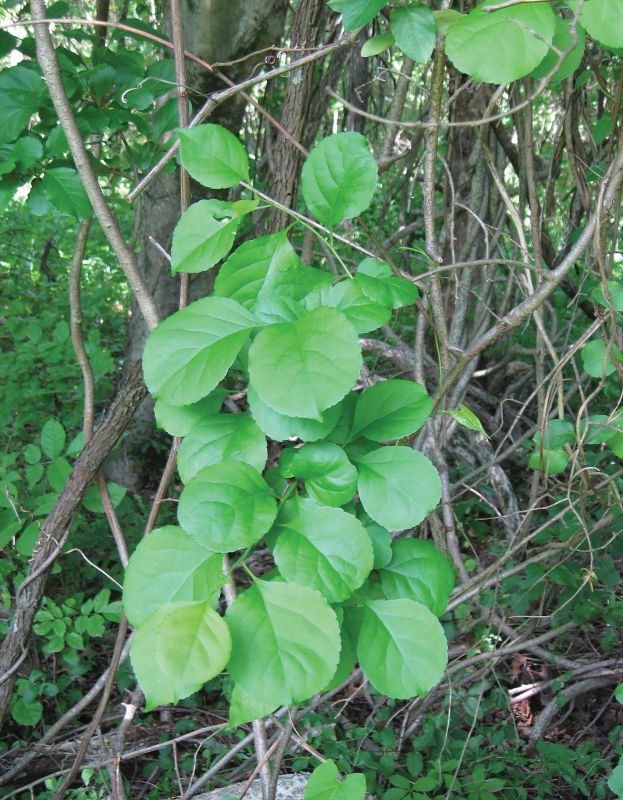
Native to eastern Asia, Round Leaf Bittersweet is a sprawling vine plant that smothers native and non-native shrubs and trees. It can grow in expansive networks; one vine can grow up to 66 feet long. The vines wrap, constrict, and even girdle trees. Once they have expanded into the canopy the leaves often shade out the trees they are growing on, resulting in mortality. The vines are difficult to get rid of once they are established and can take over woodlands. Since this vine has varying leaf shape, it can be somewhat difficult to identify. Its berries most easily identify it in late summer or fall, a bright orange/yellow or red.
Methods of Identification:
Stems: Vines with green leaves in the spring/summer, leaves turning yellow in the fall.
Berries: Start green and turn an orange/yellow or bright red.
If you find any of these species on your property and have questions on how to best control or remove them, feel free to give me a call at the Caledonia NRCS/SWCD office 507-724-5261. You can also contact your local DNR Forestry office with questions.
Leave a Reply