
Photo submitted
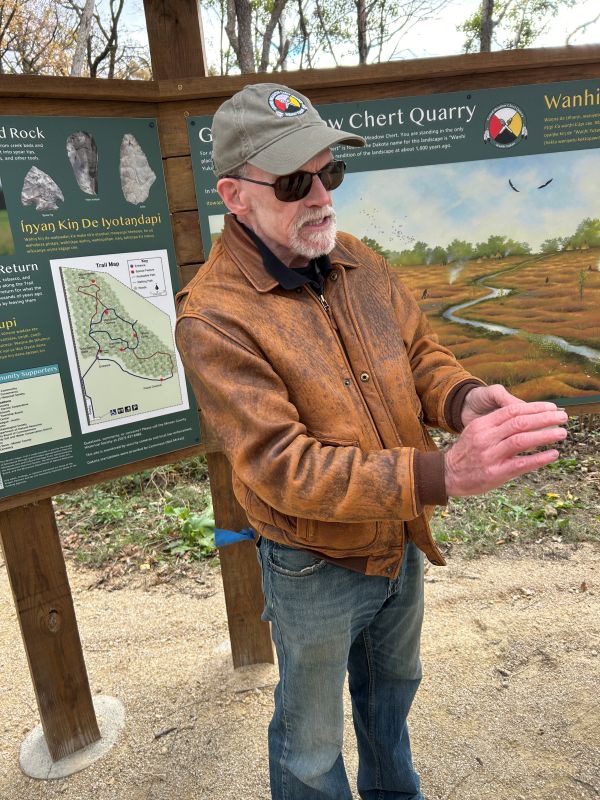
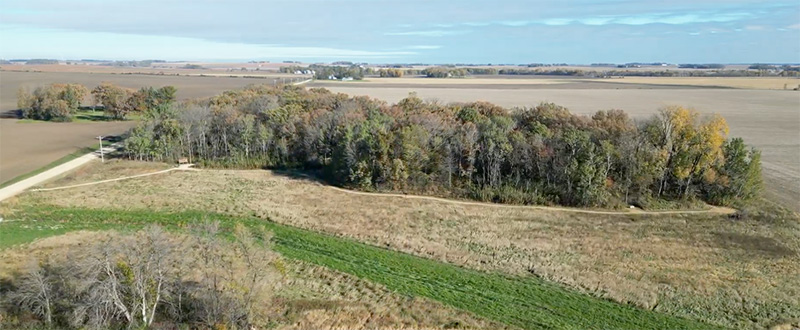
The Grand Meadow Chert Quarry/Wanhi Yukan Preserve is a new place to explore near Grand Meadow, Minn. Wanhi Yukan literally means “There is chert there;” this chert quarry was created in prehistoric times to gather the highest quality chert in Minnesota.
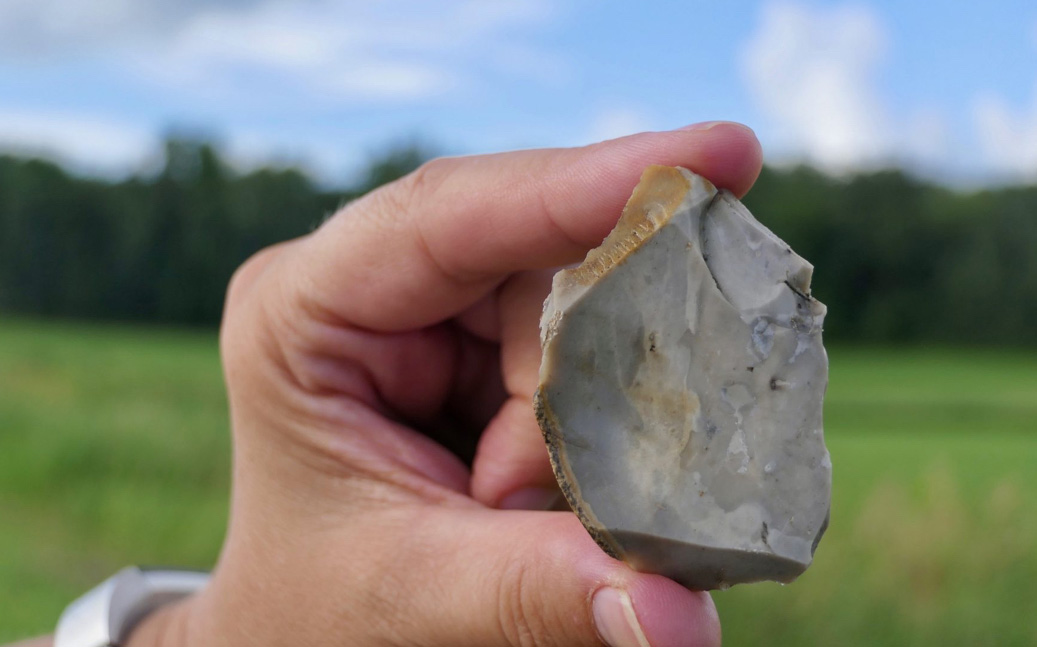
Many people are unfamiliar with the word “chert.” Chert is a dark flint that is composed of fine grain crystalline quartz; it fractures with sharp edges. A lighter grey band surrounds a darker center band; chert has a limestone outer shell. Fossils of sea creatures are often found in chert.
Chert was used by the ancestors of the four local Dakota Communities, the Ioway and the Ho Chunk/ Winnebago about 8,000 years ago to create knives, tools, projectiles and most significantly, hide scrapers which were used in harvesting bison. Since the discovery of the Grand Meadow Chert Quarry, chert found in 52 Minnesota counties has been identified as coming from there as well as chert found in Iowa, Wisconsin, South and North Dakota. Ninety-seven percent of the chert found at the Bryan Site in Red Wing proved to be from Grand Meadow.
Natives first found chert along the creek, Chert usually is found in layers of rock, but this chert was in the form of nodules which were easier to gather and use. Grand Meadow is located in the Root River archaeological basin on the edge of the Driftless Area. At that specific area, the layer of chert ended up exposed near the earth’s surface. Once the supply of chert on the surface diminished, the natives started digging progressively deeper quarries side-by-side, sometimes perhaps filling in one quarry with dirt from the new one.
Natives gathered the chert using digging sticks and hoes made from bison scapulas.
After loosening the earth, baskets were used to carry dirt away. Ramps were built to move the dirt out of the hole. Chert nodules were handed to someone on the edge of the pit who inspected and formed it into tools on the nearby anvil stones. As many as 30 hide scrapers could be made from a single chert nodule; the hide scrapers were essential in processing bison hides and needed frequent resharpening with antler pieces.
During the time of the ancient city of Kahokia, the demand for chert increased.
Improvements in agriculture, larger villages and the farming of corn, beans and squash resulted in a need for more bison hides, which then resulted in a need for more chert to create hide scrapers.
Over 2,000 quarry pits were dug over 8,000 years. Some of the pits were enormous, up to 10 feet deep. People traveled to the site in the spring and fall to restock their chert supply.
The site, last worked about 600 years ago, was hidden away over time by vegetation; native tribes had no oral histories about it.
In 1952 Maynard Green, who grew up four miles from the site, figured out what it was.
Plowed fields nearby had millions of pieces of broken chert.
In 1980, Tom Trow, a field director for an archaeological survey from the Minnesota Historical Society visited the site. When Trow and his associate first saw the site, they knew Green was correct. According to Green, “Those boys purd near lost their minds!” An air photo taken after a nearby farmer cleared some land showed the density of pits in that area.
In 1994 the site was put on the National Register of Historic Places; the same year the National Archaeology Association purchased the eight acres of undisturbed oak savanna and another five acres of land for a preserve. The original Grand Meadow Chert Quarry covered about 175 acres.
Little was done with the site until Trow took on the project during the pandemic. Trow wanted to ensure this was a cultural project as well as an archaeological one. He contacted Franky Jackson of The Prairie Island Indian Community to be involved in the project. The community is leading the interpretation of the site and vetting the signage at the preserve.
The Archaeological Conservancy owns the land; the Mower County Historical Society and the Prairie Island Indian Community manage the site.
The preserve had been overgrown with buckthorn which needed to be cleared in a six-year-long project. Originally the land had been prairie; seeds gathered from within 11 miles are being sowed to restore that prairie.
A walking trail needed to be created in the preserve without disturbing any of the pits, a bigger challenge than anticipated. More than half of the walking trail is now accessible for wheelchairs as it winds between pits.
Fifteen one-ton stones were brought in to provide places to enjoy the preserve as a park.
Three-fourths of the way on the trail a talking circle has been created with stumps and rocks for teachers to use with classes.
Grants from the Minnesota Historical Society’s Legacy funds and donors provided funding for the initial work on the site. An endowment fund has been established to provide ongoing maintenance.
Signage on the shelf-guided tour is in both English and Dakota. Rochester and Austin schools are developing a curriculum to be used with their native students.
“This cultural project is intended to be a living, breathing part of the lives of the descendant communities,” Trow shared.
Clearing the quarry pits was tackled by a constant stream of volunteers; this has been a community project according to Trow. Sentenced-to-serve workers from Mower County work at the site weekly.
A grant has been applied for to excavate some of the flatter areas in the preserve which look as if they may have been filled in. First non-invasive techniques such as ground penetrating radar and lidar will be used. The goal is to excavate some of the flatter areas next summer to possibly find artifacts such as pottery or fire remains that could be dated.
People have been coming daily to visit the preserve since its opening in July this year. The area has been designated as a hot spot for birding by Cornell University. So far 61 bird species are on record at the preserve.
Tom Trow calls the preserve a “little oasis, both an ecological and archaeological oasis!”
Next time you feel the need for a peaceful walk or the urge to learn more about the history of the area and its people, take a trip and explore The Grand Meadow Chert Quarry/Wanhi Yukan Preserve; you won’t regret it!
Leave a Reply