

An orange was a precious Christmas gift, a century ago, for children in southeast Minnesota. In general, however, fruit could be consumed during the winter only if it had been canned after summer or autumn harvests. The transition from canned fruit to fresh fruit was highly anticipated each summer. “There were wild strawberries that were the sweetest and most succulent that I have ever tasted anywhere,” wrote Warren Lange about his youth in the 1920s and 1930s on a Houston County family farm on South Ridge. In addition to the apple orchard, he recalled black raspberries (black caps), currants, blackberries, ground cherries, apples and wild grapes with which his mother would make “the most delectable jams.” Not to be forgotten were her excellent elderberry pies. His younger brother James (Jimmy) remembered her wild black raspberry pie. Hickory nuts were a key ingredient in butterscotch pudding and Himmel’s Torte, made with dates and whipped cream. Black walnuts, butternuts and hazel nuts (filberts) were also enjoyed, but some nuts presented particular problems.
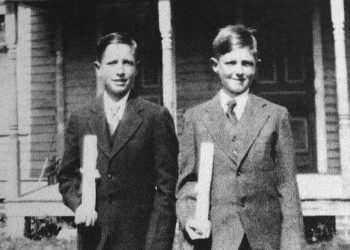
Photo submitted
Fresh fruit could be problematic for the impatient. The blackberry patch beckoned the Lange brothers, but usually too early in the season for their digestive comfort. Their impatience beckoned them before the berries were completely ripe, so the boys would show up with a few sweet crab apples. By alternating bites of crab apple and blackberries, they could tolerate the taste of the green fruit. But they ate themselves sick. What the taste buds could tolerate, the stomach could not. They never revealed to their parents the source of their digestive discomfort. But neither did they abandon their insatiable quest for blackberries. As the weeks passed, the berries became more palatable and their stomachs more forgiving.
Still, some of young Warren’s happiest memories involved visits to patches of natural produce. On autumn Sunday afternoons, gathering hickory nuts was a cherished family event, which was a peaceful departure after a busy summer of farm work. The only stress involved getting to the nut trees before the animals did. While bringing in the cows, Warren kept a close watch on the ripening process in the trees.
When the time came, their mother would pack some food, and the family, including his father, would head out for their favorite nut trees. The brothers would climb the trees and shake the branches, which on a good day would result in a rain of nuts. They would then descend and help fill the buckets. Then it was time to enjoy the picnic lunch and then a leisurely walk back home to awaiting chores. “This radical change in pace was a balm to my spirit,” reflected Warren.
Hazel nuts or filberts presented a challenge and patience. When harvested, they are covered with a “obnoxious” sticky resin. The boys would lay them out on a tin roof for about a week, so the resin would dry and the nut could be extracted more easily.
Black walnuts required ingenuity as well as labor. It was a messy endeavor to remove the husks. The easiest solution was not most pleasant for the squeamish and took too long for the eager eater. One could wait until maggots went to work in the pulp of the husk, which would then be somewhat easier to handle and open. But the maggots and residue would have to be washed away – simple but unpleasant.
Another black walnut solution was to drive the nut through a hole in a board to break the husk and remove the walnut. But Warren described this method as a “physical job.” A third alternative was to drive the wheel of a car over a bed of nuts. Warren reported mixed results at his house, but he devised another use of the wheel. He would “jack a drive wheel off the ground, place a grooved board under the designated wheel and then with the car properly blocked, proceed to feed the walnuts under the turning wheel.”
Warren tried every method of extraction, and they all stained his hands a dark brown. Vigorous washing with soap and water would lighten the stain but not remove it. However, the discoloration would fade through time.
Sources: “Farm Tales” by Warren Lange and “A grandpa’s Thoughts” by James A. Lange