

Part three of a series
The Pastor wrote to his bishop, “I am sorry to tell you about the death of my wife. Can you arrange to send me a substitute for the weekend?”
Sister Mary Hafner included many jokes when she published her collection of childhood reminiscences. During the early 1930s, there was a predictable weekly rhythm to life on farms in Houston County.
Saturday
Housecleaning was the order of the day. Furniture was moved to one half of a room so the hardwood floors could be scrubbed. “Be sure to get the corners.” There was no wall-to-wall carpeting or vacuum cleaner. Smaller scatter rugs were hung on wash lines to be attacked with a rug beater. For larger carpets, there was only a non-electric carpet sweeper. Some living rooms had an inlaid wood floor with ornate designs. Mary pointed out, “Farmers’ wives took great pride in their highly-polished varnished floors.”
Spring cleaning and autumn cleaning were major projects when according to Mary, “nothing escaped being examined for cleaning, repair, painting or disposal. Most farm homes had very little clutter of knickknacks. Life was frugal, simple and vey clean.”
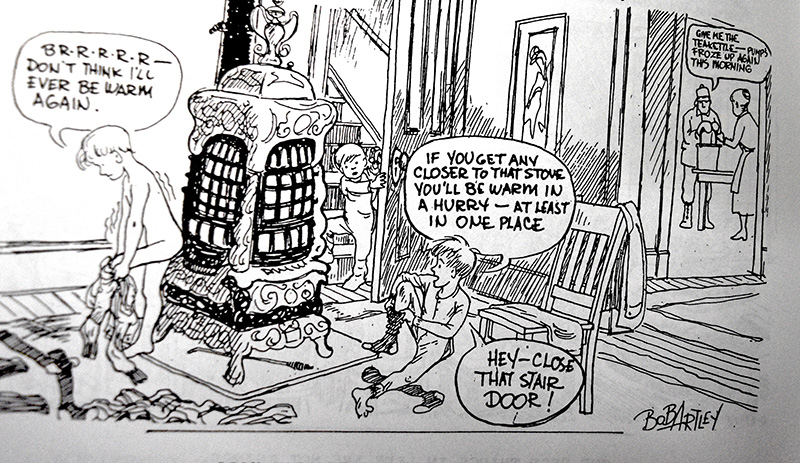
Cleaning day closed with Saturday night baths without indoor plumbing. With kitchen doors closed, a washtub sitting in the middle of the kitchen served as a bathtub to be filled with hot water from the stove reservoir. One child after another had time in the tub. The lone complaint was about the water getting cold.
Sunday
Sunday worship was a sacred duty. Lutherans, Catholics, Methodists and other denominations all filled pews. In winter, farm folks traveled to church in Hokah with a horse and sleigh with the children tucked under a horse blanket. During worship, horses waited at a hitching post on Main Street. Catholics, like Mary, fasted from all food and drink, including water, from midnight until after 10:30 a.m. Mass – in other words, from midnight until noon.
Following worship services, farm families picked up groceries at the local store, which stayed open for that shopping. All other stores were closed on Sunday. You handed your grocery list to the grocer, who while you waited, collected all the items and threw in a “good-sized bag of candy” for free.
One Sunday, Mary’s aunt asked her to get a loaf of bread (10 cents) at Hoffman’s Grocery and charge it to her account. “On the cash register receipt, he wrote, “Aunt Maggie;” he had no idea what her name was. Grocers knew and trusted customers.”
After leaving the grocery store, most folks gathered at the home of a relative for coffee and toast and to catch up with the latest news. Sunday dinner was special, quite often a chicken dinner, including a special dessert. The Sunday sermon was the topic of conversation. Mary’s father made sure all the children had paid attention and understood the message. “So did the Sisters at St. Peter’s (school) in Monday’s religion class,” said Mary. “What was the sermon? Tell about one article from Our Sunday Visitor newspaper.”
Sunday afternoons were usually spent at home, maybe taking a nap, or occasionally visiting or entertaining neighbors when playing cards, throwing horseshoes and other pastimes might be enjoyed.
Monday
Monday was laundry day. Women made pure white laundry soap, mixing lye with meat cracklings (residue from melting down chicken or hog fat). Mary vowed that soap would remove “every kind of spot.”
Before electricity was available, there was a gasoline-powered Maytag washing machine. Sister Mary referred to a “motor-run Maytag” with a movable wringer, which with the homemade soap, “brought pure white clothes.”
“Two big washtubs served for rinse water followed by bluing water. Long, outside wash lines heavy with clothes and sheets to dry, draped the countryside.” Even in winter, all the laundry was hung outside to dry and freeze stiff until the girls returned from school to bring it all back inside. In really severe weather, clothes lines were strung up inside.
Tuesday
Tuesday was devoted to ironing and mending. Ironing was a long, hot task with an iron heated on the wood stove. With the iron and handle being all in one piece, a potholder was used to hold it. Later, an iron with a detachable wood handle was invented.
There was not yet permanent press in the 1930s, so most clothes were ironed, including men’s shirts and pants, ladies’ dresses, blouses, skirts and aprons along with everyone’s handkerchiefs. Disposable tissues, the first being Kleenex, were not yet available. Before leaving home, Mom’s last admonition was, “Be sure you have your handkerchief!”
Mending was accomplished on a “reliable” Singer sewing machine, powered by foot pedals. “More than once, I made a bargain with my mother,” wrote Mary, “that I’d do the mending on the machine, if you do the dishes.” Hand mending, such as darning cotton stockings, was not included in my offer.”
School Days
On school days, “a horse and buggy caravan wended its way to St. Peter’s School” in Hokah. Another caravan arrived from the south towards Brownsville. In winter, the buggies were replaced by small, lightweight sleighs, known as cutters. There was “an occasional tip-over into a snowbank,” she recalled. Their “smart”old horse knew where to turn at intersections and where to stop for a rest and a water break, even when the driver fell asleep.
Horses needed hay when students needed lunch. “Just before an unwelcome history test in grade eight, one might hear a boy say, “Sister, I forgot to feed my horse during noon hour. If I don’t, I won’t get home!” The test would be taken after his return.
Horses were a necessity on the farm. However, valuable work horses eventually became older but still valuable. Being more gentle, more tolerant and even fond of children, former work horses became “to school” horses.
Another Chuckle
A doctor was gradually losing patients and couldn’t figure out why until an office assistant suggested not humming NEARER MY GOD TO THEE while writing prescriptions.
To be continued …
Sources: A series of guest columns published in the Houston County News, (La Crescent, Minn.) were later published in a book, “Life on the Farm in the 1930s,” by Sister Agnes Hafner, FSPA, 2004. The cartoons by Bob Artley were originally published in the Worthington (MN) Daily Globe, and later in his book, “Memoirs of a Former Kid,” 1978, and again in 2004 in Sister Hafner’s book.
Leave a Reply