

It was Christmas in the 1870s on a South Ridge farm in Mound Prairie Township in northeast Houston County. After the children had gone to bed, their German immigrant mother Emilie Freischmidt Burow spread a white table cloth on the dining room table her husband Fredrich had built. She set out four plates on which she placed some candy, apples, popcorn, a toy or two, and nuts. “Did it ever look good to us children,” said daughter Augusta. “At that time, Christmas trees were hard to get. There were none nearby, and no cars or even horses to go after one.”
Six decades later (1930s), in the southeastern corner of the county, Christmas was observed by another German immigrant family, that of John and Jenny Petersen. Having immigrated in 1927, they had settled in Crooked Creek Township near Reno. There was the holiday singing of “O Tannenbaum” (“O fir tree,” known in English as “O Christmas Tree”). The day before Christmas Eve, father would sing, “Mogen Kumpt Der Vines Man” (Tomorrow comes the Christmas Man (Santa).
One Christmas Eve afternoon, the children were told by their mother they could walk down to Reno to play. “How busy she must have been while we were gone,” opined one of those former children, Caroline Petersen Heimerdinger (1927-2018). “Mother had decorated the cedar tree, and the cows had to be milked early. The goose was in the oven. We had butchered two of them a week before.” One goose was for Christmas, the other for New Year’s Eve.
The two birds were hung high outside the house to freeze. The innards were not removed until the geese were brought inside to thaw. “The head was always cleaned,” recalled Caroline. “Dad would split it open with a knife, pounding it his hand on the table.
“When we returned home, we could smell oranges. It was the only time of the year we had them.” The door to the parlor was closed, and the children were informed that Santa had been there. Meanwhile, Uncle Nick, who worked for a farmer near Spring Grove, and Uncle Andrew from Reno had both arrived for the annual Christmas Eve meal.
The goose was served with potatoes and gravy along with sweet and sour red cabbage. The green beans had been cut on a board with a knife as thin as possible. They had then been placed in a crock with handfuls of salt and weighted down with a plate and a rock. The beans would be brought to a boil three times, drained and then cream added and thickened. “Just think of the great nutritional value they had!”reminded Caroline. One year, mother received a bean cutter the family had found advertised in the Sears and Roebuck Catalog.
And finally, there was prune pie with whipped cream. Caroline, as a senior citizen, could not remember if there was a German word for dessert. Her mom would say that it was “for after.” Rhubarb was cooked and thickened with cornstarch until very thick before being served cold with cream. Juices from raspberries and elderberries were prepared in the same manner.
As soon as stomachs were filled and the dishes cleared and washed on Christmas Eve, it was off to Peace United Church of Christ via horses and sled with passengers wrapped in blankets. The Sunday school program was always held on Christmas Eve. Caroline remembered having to go to Mildred Leiser’s house in Reno where she received help memorizing her part in the program. Neither of her German immigrant parents could read it (probably not yet fluent in English).
It was comforting to arrive back to a warm home, greeted by the fragrance of those oranges. However, the children were not allowed to enter before mother would enter through the bedroom door and light the candles on the tree. “What a beautiful sight!” exclaimed Caroline. “The tip of the tree had a gold piece holding four candles. The heat of the candles made it go around, and I can still remember the sound it made when a little piece hit a round bell.”
Neither Uncle Andrew nor Uncle Nick ever went to church on those Christmas Eves – hmmm. But they would still be at the house when the family returned home to open presents – hmmm. “Their excuse was always that they had to keep the wood stove going,” – hmmm.
As a senior citizen, Caroline said the only Christmas gifts she could remember were new sleds, a wagon, mittens and a large music top. There was always a box shipped from Germany, “a delight to open for mom and dad.” The box always had goat and sheep cheese, which relatives in Germany had made. One year, there was also box for Caroline with a blue and red corduroy apron.
On one December 16, baby brother John was born at home, and mother was in bed much of the time around Christmas. Aunt Frieda Michelson came over to care for the children. When the Christmas tree caught on fire, Aunt Frieda threw a rug over it to put out the fire. Usually, in a cold parlor, the Christmas tree kept its needles until hosting guests on father’s January 22 birthday. There would also be Christmas cookies saved for dad’s birthday. However that year, there may have been cookies that survived, but the tree was long gone before becoming a birthday tree.
Eismilten were German Christmas cookies, topped with coconut. Jello cookies were another Christmas treat.
Sources: Memories of Grandma Jenny’s Kitchen, by Caroline Petersen Heimerdinger, 1995. My Parents, by Augusta Burow Arnett, 1944
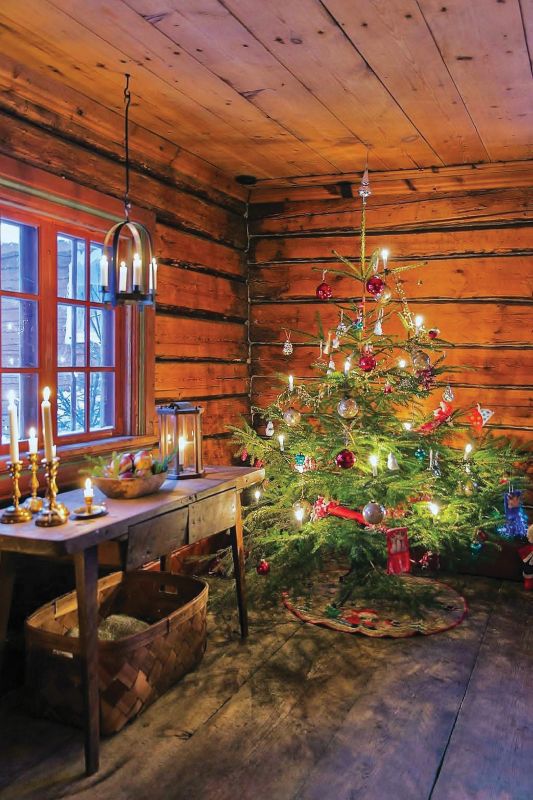
Photo submitted
Leave a Reply