

Part two a two-part series
Her mother put it under the feather tick (mattress) after she got up in the morning so it would rise. What it was – was bread. Mother baked a lot of sourdough bread. “We were never without it,” recalled Caroline (Petersen) Heimerdinger about her childhood in the 1930s. There was also white bread, made with a potato water starter.
Caroline was born in April 1927, a month minus a day after her parents John and Jenny Petersen immigrated from Germany and settled near Reno in Crooked Creek Township, Houston County.
Supplying a family with bread required skill. Caroline’s mother shaped loaves “in” her hands, never on a board or table. When young Caroline attempted to duplicate the procedure, the dough would stick all over her hands. Her mother had little patience with her. “It wasn’t until I worked as a hired girl (I made $12 a week) at William and Pearl Ideker’s that I learned to bake bread,” she lamented.
Another of her mother’s specialties was blue cheese. From milk, she would make cottage cheese and squeeze it out until very dry. It would be hung in a cloth on the clothes line in the sun and then be placed under a crock jar on the basement floor. It would become green with mold, which was scraped off. The cheese was especially enjoyed on rye bread.
Sulfured apples resulted from a three-woman, three-day, three-house peeling production. Caroline’s mother and two friends, Florence Schaller and Amelia Heiller would convene on three afternoons, once at each of their houses. They peeled apples, placed them in a flour sack, which was laid on a rack in a barrel under which was a bed of coals, sprinkled with sulfur. They kept the apples in a crock jar all winter. The later preparation involved soaking the apples in water and then cooking with raisins for sauce. The apple slices remained intact and still very white.
When Caroline’s mother referred to dessert, she would just say it was “for after.” There was tapioca pudding as well as graham cracker pie with egg white frosting, cookies, raised doughnuts, Knep Kuta (raisin buns) and knee caps (small fried doughnuts).
They often had hot soups “for after,” such as elderberry juice with apples and dumplings made from cream of wheat. There was also buttermilk soup with “mounds of beaten egg whites.” A Saturday treat was dried fruit soup made with apples, raisins, prunes and lemon slices. This was served with large, thin pancakes, which were stacked on a plate and then cut through in a pie shape. It was accompanied by head cheese that had been marinated in vinegar.
One year, the family ate a lot of chicken, the year the smokehouse caught on fire. The smokehouse on the family farm was usually filled with beef and pork. The butchering usually occurred while the children were in school, but occasionally on Saturdays when the boys may have helped. Their father cut meat with a hand saw.
Ham and bacon was soaked in brine for three weeks and then smoked. Ham was preserved by being wrapped in cloth sacks and buried under oats in the granary. Some liver was made into liver sausage, sometimes smoked in casings (membrane of the intestines) or canned and very good on rye bread.
However, young Caroline was especially fond of fresh liver, about a pound of which was ground and then mixed with an egg, two tablespoons of flour, chopped onion, salt and pepper. A tablespoon of the mixture was dipped into bacon fat and slowly fried. “Any child that doesn’t like liver will eat this,” informed Caroline, “thinking they are hamburgers. Put on a fresh roll with catsup. The fresh liver was so good!”
Caroline called another favorite, “reepling.” When lard was cooked, small pieces of crisp residue, called cracklings were collected and added to pearled barley, which had been soaked overnight in the broth left over from cooking a pig’s head. Raisins and cinnamon were added as was blood. This was then put into casings and boiled in water before being served with syrup. “Oh, how delicious!” exclaimed Caroline. “It was a good supper with fried potatoes.”
Some cracklings were pressed into bowls and then with lard poured over them, placed along with rye bread in the children’s school lunch pails. Those lunch pails were originally gallon syrup pails.
Pork chops were canned after first being browned, packed in jars and boiled for three hours in the wash boiler on the wood stove. “Such rumbling and such steam!” remarked Caroline.
Not much of a pig was wasted. The fat piece of a pig’s cheek was boiled with potatoes or rutabagas. Pork hocks (leg joints) were cooked and the broth thickened with flour before vinegar was added and eaten with potatoes. Summer sausage was made with beef and pork, which was stuffed into long large casings, smoked and then kept in a box of salt in the attic.
Most beef was also canned, also after being browned. One specialty was called “Nap Andean.” Flank steak was cut into thin strips with a piece of bacon lard on top and then rolled up in a roll and tied with a string before being browned and canned.
In later years, the family kept meat in a locker in New Albin. “We didn’t get it very often, so when we did get it, we wrapped it in newspaper and laid it on the basement floor.” Eventually, rural electrical lines arrived, and a home freezer was purchased.
Source: Memories of Grandma Jenny’s Kitchen, by Caroline Petersen Heimerdinger, 1995.
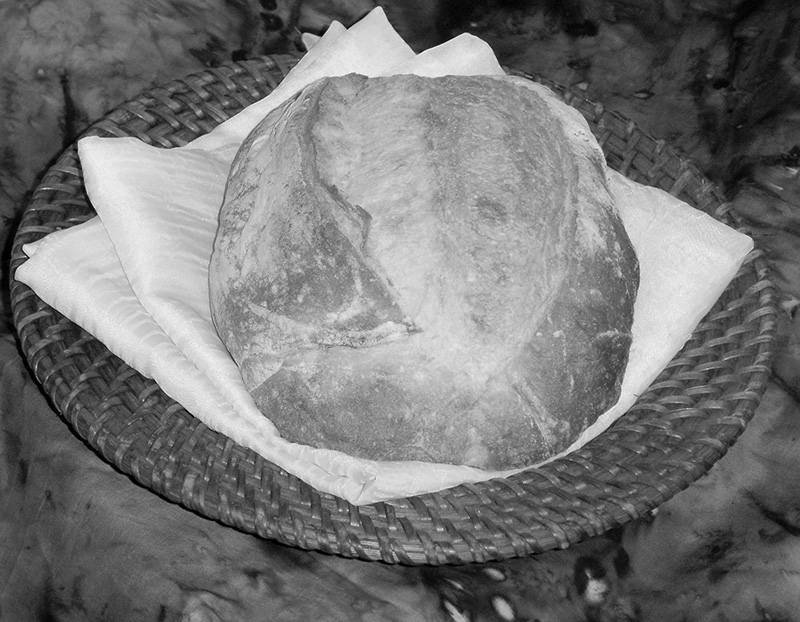
Photo submitted
Leave a Reply