
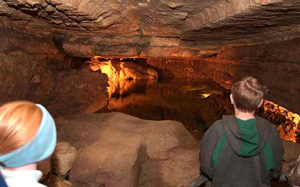
Seventy-five people from all over Fillmore County attended the 2019 Economic Summit on Outdoor Recreation coordinated by the EDA. MiEnergy Cooperative sponsored the event held March 29 at Eagle Bluff Environmental Learning Center.
John Torgrimson, interim director for Eagle Bluff, gave a brief overview of Eagle Bluff which had 16,000 visitors in 2018. It partners with 140 schools to enhance classroom learning experiences. Eagle Bluff has a staff of 30 people, of which 14 are naturalists. Education programs and outdoor adventures serve children and adults throughout the year.
EDA director Marty Walsh has been with Fillmore County for about 18 months. He was happy to see that attendees represented every township in the county, plus a variety of industries and interest groups. Outdoor recreation drives tourism and enhances the quality of life. “Families value outdoor recreation,” he shared.
The median age of Fillmore County residents in 2017 was 42.5, which is nearly 10 years older than it was in 1980. Many people work in education, health, or social services, but there also is manufacturing, agriculture, construction, retail, and the arts, including entertainment and recreation. According to a Headwaters Economics study, rural counties with more recreational opportunities drew more new residents with higher incomes and faster earning growth than places without recreation.
A new comprehensive recreation map was launched this day. Peter McColl, GIS analyst and master’s student at Saint Mary’s University of Minnesota, demonstrated how to use the map he designed to plan an outdoor trip/day. There are 16 layers a user can use to highlight the kind of outdoor recreation one is interested in. For example, a layer designating hiking trails can be overlayed with a layer of roads to help locate access points. One can click on the trail and learn more detail about the trail. There is a search tool, so one can search with a key word. Click on a state park, for example, and get the name, acreage, and hunting/yes or no. There is also a measuring tool.
The main goal is to easily find a specific recreational option. McColl said it will be easy to incorporate future development into the map, adding to or updating the map.
McColl noted there is a DNR map but it only shows DNR property. This comprehensive map will include county, state, city, and private properties. The map will be on the county’s web page www.co.fillmore.mn.us. Then under departments click on “Economic Development” and then “Recreation Map.” Cities are encouraged to add it to their city pages.
Brian Kugel is developing an online platform for outdoor enthusiasts called “GoAdvntr.” He promotes the platform as a tool to help grow outdoor recreation businesses. The platform will be launched this summer. He said there are limitless adventures in this region; we can draw talent to the region. His online marketplace can connect hosts to guests. The focus is to build small businesses. It will be commission based. “We don’t make money unless you make money.”
Lisa Havelka, southern regional manager for Explore Minnesota, explained she covers 36 southern Minnesota counties for the state tourism agency which exists to facilitate travel to and in Minnesota. Leisure and hospitality is a $15.3 billion industry in the state. It generates 18% of the state’s sales tax revenue. Travel and tourism generates over 270,000 full- and part-time jobs, which is 11% of the private sector job market. She notes,“Jobs fill your pocket, but adventure fills your soul.” Fillmore County had gross sales in leisure and hospitality services in 2017 of nearly $22 million, employing 678 people in the private sector.
County Attorney Brett Corson spoke on recreational land use. He commented that worry about liability stands in the way for some property owners. If a landowner gives permission for access to his property for hunting, hiking, or other recreational uses without charge, he owes no duty to warn of dangerous conditions or must he maintain safe entry or use by others for recreational purposes. If there is no charge for use, the landowner does not have liability. For example, snowmobile or horse trails, as long as the land owner is not charging for use, he is not liable. Corson maintained there would have to be almost intentional neglect to be liable.
If one charges for recreational use, there may be liability. There is liability associated with making money when providing land access. Corson said if one charges for use, that owner most likely has insurance. The property owner may often have an individual who is paying for use of the property sign a waiver, which is a release of liability.
Corson also spoke about agritourism, for example, tours of a dairy to see a milking operation. In these cases, liability is limited unless there is a professional willful disregard for safety.
Tim Gossman represented the Bluff Country Hiking Club which developed the 6.5 mile Lost Creek Hiking Trail near Chatfield. Six willing land owners granted permission to have the trail cross their property. There has been a lot of local support and the city of Chatfield budgets $2,000 annually, which is used for brochures and liability insurance. The trail is used for hiking, running, and snowshoeing. The club maintains the trail. It is open 11 months of the year, only closed during shotgun deer season. Gossman says it is an opportunity to share what we appreciate with other folks. For more information and a map of the trail go to www.bluffcountryhikingclub.org.
Jeff Broberg, chairman of the National Trout Center, geologist, and avid fisherman, stated there are 2.2 million fishing licenses sold and 101,000 people buy trout stamps in Minnesota each year. Trout anglers spend on average $474 per trip.
He explained how this driftless area (no glaciers) produced an amazing landscape. It is a drainage area with deep valleys and rolling hills providing a “world class fishery”. Minnesota native brook trout have bred in this landscape for 12,000 years.
More and more handicapped access areas have been constructed to allow access to fishing for everybody in every stage of life. At NTC we try to teach people how to have a great fishing experience. A nine hole fishing course has been put together in the South Branch of the Root River in Preston to help teach people how to fish. NTC provides a program for visitors every Saturday.