
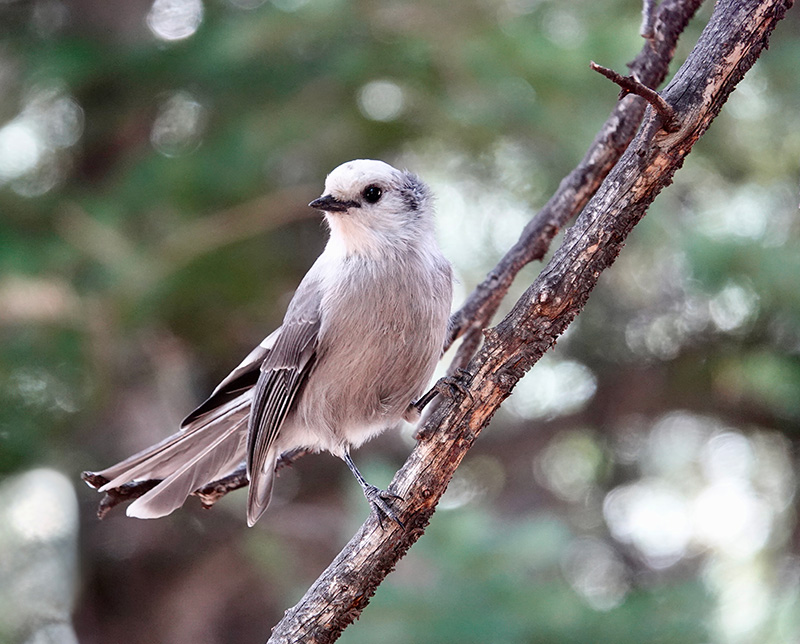
Photo by Al Batt
The tire blew.
It was louder than loud.
I was waiting to walk across a road when a truck pulling a flatbed trailer carrying a backhoe had a trailer tire blowout as it went past me.
The world became quieter.
It reminded me of bowling.
Before pickleball, there was bowling.
Our phy ed teacher, in an effort to oust us from our opaque corners, decided our steep learning curve should involve bowling. He reminded us he had bowled a 288 game using a baseball, but we shouldn’t hope to match his incredible accomplishment. Our goal was to avoid getting injured.
We entered Bowling Elaine’s with a great lack of fanfare. We’d hit the big time and joined the sacred circle of bowlers. The alleys produced a sound similar to distant thunder. Pinball machines added to the din. A tumult of voices and balls hitting pins greeted our ears. There were strikes and gutter balls. Gutter balls gave pins a chance. Tantrums were thrown.
League games were taking place. Bowling shirts bearing the bowler’s name on the front and the team’s name on the back were an all-purpose shirt that could be worn by bridegrooms.
William Tell and his son were self-sponsored. They bowled for “Whom the Tells Bowled.” The Tells sold archery equipment.
Some of the more sophisticated competitors had their own bowling balls, which they carried lovingly in bowling ball bags. The others picked from a rack of bowling balls, where the right ball could never be found.
There was a familiar smell of fryer grease in the air. We’d been there before; waiting for parents to pick us up after school events.
The occasionally friendly bowling alley proprietor didn’t see a phy ed class made up of junior high boys. He saw a group of future league bowlers needed to enrich the business’ coffers. He almost smiled at the thought.
This was long before The Dude and Walter Sobchak had given bowling gravitas in the movie “The Big Lebowski.” It was even before a movie about bowling called “The Empire Strikes Back” hit the big screen.
Our teacher gave us basic instructions on how to obtain our rented shoes, and which hole of a bowling ball fits which finger. We were warned not to get our fingers pinched in the ball return, and to try not to lose a ball.
Then he went into the finer details of the sport. We should pick up the ball and chuck it towards a herd of pins, without crossing the foul line.
Apparently, the pins were our mortal enemies.
This was right up our alley. We had talent to spare.
Then we learned how to keep score. We’d been told there’d be no math.
“If you can’t hear a pin drop, you are a terrible bowler,” he concluded.
I got a strike on the first ball I rolled. I resisted the urge to toss the ball into the crowd. My game went downhill from that point. All I could manage to strike was a pose.
Despite the lack of strikes and spares, we were having a ball in rented shoes. Bowling required jokes. Why were dinosaurs bad at bowling? Because they were extinct.
Joan Didion wrote, “Life changes in the moment. The ordinary moment.”
There was no tomfoolery involved in what a classmate named Kenny did, but life changed. Kenny wasn’t a clueless chowderhead. He was a good guy. We were at the age where we’d think without thinking.
When it came to bowling, Kenny had more will than skill.
Kenny, in his haste to lay waste to the pins, had not given the pin-setting apparatus enough time to complete its work before he flung the heaviest bowling ball down the alley.
The ball should have been cited for speeding. It bounced twice and then it happened.
BANG! The ball hit the pinsetter with a resounding whack like the sound of a trailer tire blowout.
Earth paused in its rotation.
A hush fell over the crowd. It was a humongous hush.
The silence was broken by an angry proprietor, whose face was as red as a new stop sign.
The class was banned from the alley.
But not before I’d marked a strike for Kenny.
Leave a Reply