
Photo submitted
Photo by Wanda Hanson
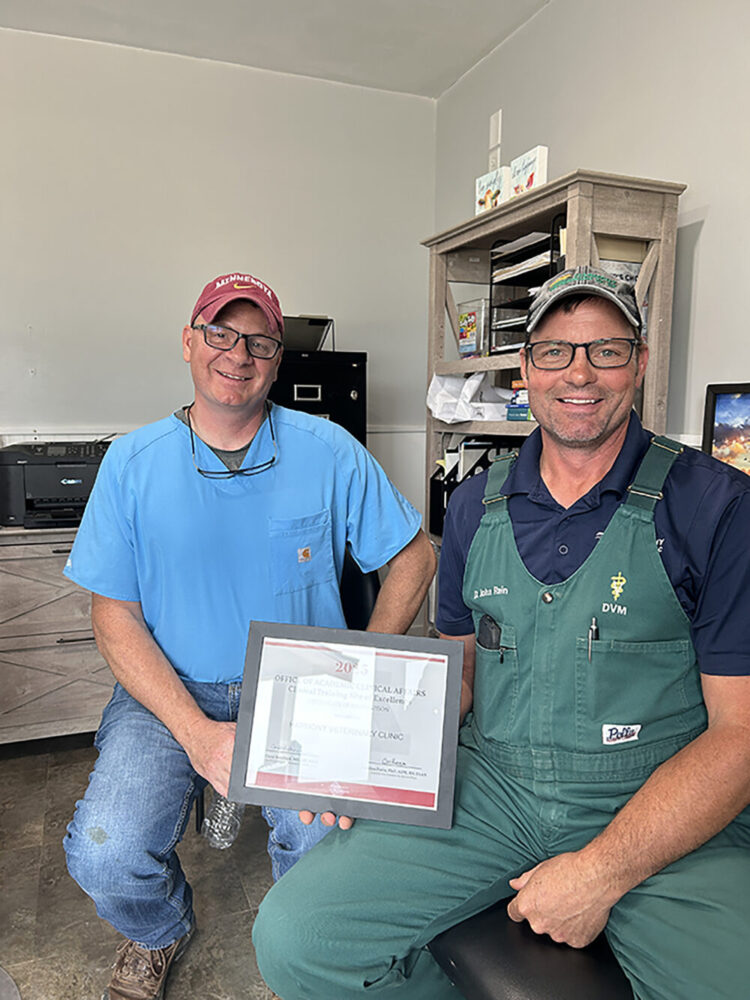
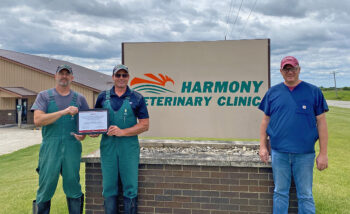
For the past 14 years, the Harmony Veterinary Clinic owned by Dr. John Rein and Dr. Jeff Collins has collaborated with the University of Minnesota to provide real life experience for future veterinarians. Recently UMN honored the clinic with its prestigious Clinical Training Sites of Excellence Award. Past recipients of the award have included Mayo Clinic, St. Luke’s Health System, Fairview Hospital and more. Many of the awardees deal with clinical experiences in human health care. Harmony Veterinary Clinic is only the second veterinary service to receive the award.
Dr. Tim Goldsmith, a professor in veterinary graduate studies, nominated the clinic after learning about the award from the office of Academic Affairs at the university. The award “recognizes community and clinical training partners exceptional support to University health sciences learners.” In light of what the public was hearing about rural vet shortage, Goldsmith wanted to create a better awareness of what they were actually doing.
When Goldsmith took over the lead in his department, he redid the program. Goldsmith contacted Harmony Veterinary Clinic and his old friend Dr. John Rein. Rein and Goldsmith have known each other since childhood. Rein, from Lanesboro, and Goldsmith, from Chatfield, were in Fillmore County 4-H together. They knew each other in high school. While they attended different colleges for undergrad, they both attended UMN for their doctorates. They also spent time at the Harmony Veterinary Clinic together as students. Goldsmith worked at the clinic from 2001 to 2003.
The pair set up a program where 8-10 UMN veterinary students attend classes at UMN with Goldsmith for a week and then come to the clinic for the next week to have real experiences focusing on cows and calves. During that time students stay at a local motel. After they spend the day at the clinic or at area farms, they do rounds in the evening. At that time, they each share their experiences of the day and ask questions, discussing diagnoses, treatment plans and relationships with clients. They learn that there are different perspectives and multiple ways to reach a diagnosis from the veterinarians.
The clinic is unusual in that it is a haul-in facility. This allows for a more controlled environment for treating large animals. Back in the mid-‘80s the clinic had a tilt table custom built for it. This allows for the capture of large animals. With the ability to tilt the large animals on their sides, the vets can work on sore feet, abscesses and surgeries safely. Bulls are brought in from a three-hour radius for treatment; this provides a unique exposure for the students.
Another unique learning experience for the students is visiting and treating animals on Amish farms. For most of the students this is their first time interacting with the Amish. This gives them an accurate view of the culture.
The program has expanded to offering two sessions for students at the clinic. One session is in March when calves are being born and bull season is just beginning; the other is in mid-June when bull checking season begins. There is the possibility that more sessions might be added if additional funding for the student travel expenses is procured. Merck Animal Health and many other animal health stakeholders generously provide funding.
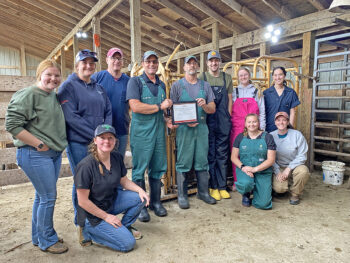
Photo submitted
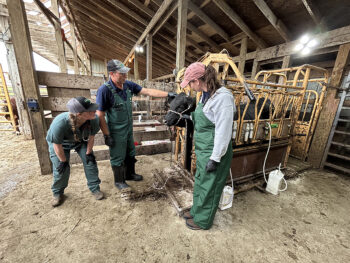
Photo by Wanda Hanson
The UMN veterinary students complete a total of 26 different rotations focusing on small animals, surgery and other types of animals.
In their fourth year, UMN veterinary students can also choose to work at a practice (This is called an externship.) In addition, some students who have not yet gotten into the veterinary program or are in their first or second year will do internships over summer at the clinic.
Harmony Veterinary Clinic provides early experiences as well. Juniors and seniors at Fillmore Central or Lanesboro High School who are interested in becoming veterinarians do ride-alongs with the veterinarians.
The UMN students do more than observe; they actually do procedures on animals under supervision. They traveled to retired veterinarian Dr. Lynn Aggen’s farm to do fertility work on bulls the morning of my visit. This entailed a physical examination of the bull—feet, legs, reproductive tract, internal and external organs and a test of the viability of the semen. The visit allowed the students a safe, non-hurried environment to learn to do the hands-on exams.
In the afternoon, the same students headed out to visit a producer to talk about his goals and farming operation. Farmers graciously volunteer their time to help the students. Rein shared that the clinic is blessed with “pretty good clientele.”
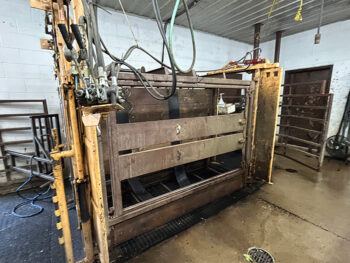
Photo by Wanda Hanson
The students shared that they learn so much by physically doing the procedures they had studied. “You can tell the doctors have been teaching for years; they are well-organized and provide us with lots of different experiences. They always ask if we have any questions,” one of the students declared. The students were impressed that the locals made a point to tell them what a great clinic they were at!
Student Mary Novak added, “I wish I could do this rotation the rest of my clinical year! This reminds me why I got into this profession!”
Dr. Jeff Collins called the program great as he pointed out that it’s good exposure on both sides. He said he and Dr. Rein learn from the students as they share what they are looking for from the program and what their expectations are in a job.
Dr. Goldsmith stressed the importance of the students knowing what it really is like to be a veterinarian. He commented that the UMN does a really good job in recognizing partnerships that work to provide real world experiences for students. An award such as the Clinical Training Sites of Excellence Award provides better awareness of how the university teaches students. Harmony Veterinary Clinic well deserved this award!
Leave a Reply