
Courtesy of Adam Makos
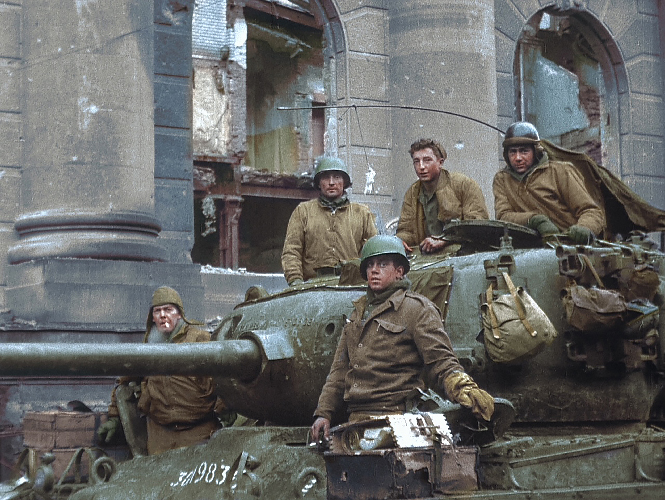
Photo courtesy of Adam Makos
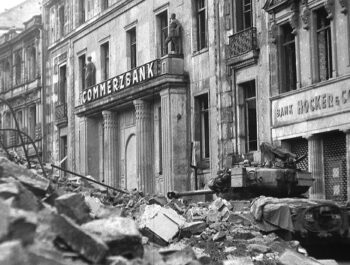
Photo courtesy of Adam Makos
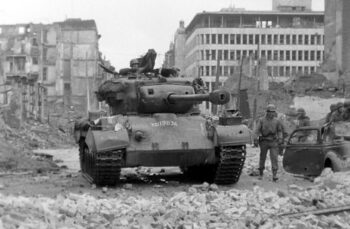
Photo courtesy of Adam Makos
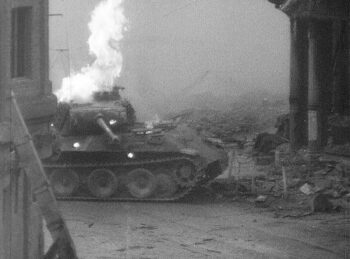
Photo courtesy of Adam Makos
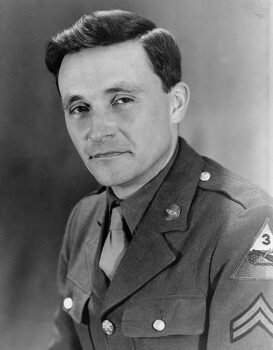
Robert Earley, a farmer from Fountain, played an important role in a tank duel in Cologne in the closing chapters of World War II. Earley was the tank commander of a Pershing tank with the call sign Eagle 7; the tank and its elite crew were part of Operation LumberJack. At the age of 29, Earley was the “hardened old man among a unit of the boyish tankers.”
Eagle 7 had volunteered to fight in Cologne. Before Eagle 7 got involved in the battle on March 6, 1945, near the Cologne Cathedral, a German Panther tank had hidden in ambush beneath a bridge and destroyed two Shermans. Then the Panther moved to the intersection near the Cathedral and waited for more tanks to appear.
Cdr. Earley chose to approach from a side street parallel to the Panther and attack from the side. Earley went ahead on foot and entered the nearby Labor Front Building, climbing several floors to investigate the area. James Bates, a war photographer, was with him. Earley told Bates to stay at that location since Eagle 7 would be coming right by it. Bates went up to a higher floor for a better view. This positioned Bates perfectly to film the tank duel.
Earley’s plan was to blindside the Panther with a side shot from the side street. Bartelborth, the German Panther tank commander, had ordered his gunner to turn the turret to the right, facing exactly where Earley planned to pull up.
Eagle 7’s gunner, Clarence Smoyer, had been given permission by Earley to fire whenever he felt right. Usually the tank commander gave the order to fire first, but Earley trusted Smoyer to make the right decision.
The Panther was “just sitting there like he owned the place,” according to Smoyer’s later comments. When the Pershing pulled up, Smoyer found himself looking directly down the barrel of the Panther; all he saw was the black hole of the muzzle.
German Cdr. Bertelborth ordered his gunner not to shoot. Not recognizing the outline as a Sherman, he thought the tank was one of theirs – German.
Smoyer wasted no time and fired. Earley saw it from his perch above the turret. The first shot punched the Panther’s engine bay; the German Commander jumped out and his driver rolled over the side of the hull. Smoyer’s second shot sent fire spreading along the length of the Panther; the other German crewmen escaped the burning tank. The final shot tore through the tank and out the other side. Cologne was theirs – the largest city that the GIs took during WWII.
Bates was able to film the entire battle between the two tanks; immediately after the battle, he had the crew pose on the Pershing for photos. Now, the video of the battle can be watched by anyone on YouTube.
Both Earley and photographer Bates received the Bronze Star for their efforts. The Bronze Star is the fourth highest individual combat award in the U.S. Armed Forces. Smoyer was chosen to also receive the Bronze Star, but he was removed from consideration for “fraternizing with the enemy.” He had been approached by some German kids and gave them some gum when they asked him for a treat.
Nearly 75 years later in 2019, Smoyer received his Bronze Star at age 96; author of the book “`Spearhead,” Adam Makos had found the necessary eyewitnesses to resubmit Smoyer for the award. The other members of the crew, Davis, DeRiggi and McVey were also awarded the Bronze Star posthumously. Their tank crew is considered to possibly be “the most decorated tank crew of WWII.”
The Pershing T26 E3 tank was an experimental design created to counteract the German Tiger and Panther tanks. There were only 20 Pershings in the European theater. It had a 90 mm M3 gun, automatic transmission, torsion bar suspension and armor twice as effective as the Sherman. It weighed 46 tons and had a top speed of around 30 mph. Eagle 7 was part of the Spearhead Division.
Following the duel in Cologne, Eagle 7 was “always the first over the hill.” The Spearhead Division went the farthest through enemy territory than any German, Russian or British unit, eclipsing even Patton’s drive through France.
In April at another battle at a railyard in Paderborn, a Panzerfaust (a German disposable, single-shot, recoilless anti-tank weapon) made a direct hit on the Pershing. The crew was forced to abandon the tank, thinking the end was near. Smoyer, however, noticed the Pershing was still idling. The Panzerfaust had not hit the Pershing’s barrel; it might still fire. The crew rushed back to the tank and clambered in.
If the barrel of the gun had been fractured, the entire tank could have blown up when they shot the gun. Gambling, they took a chance. The barrel worked perfectly and the U.S. forces ended up winning the battle.
Bob Earley was able to return home safely after WWII. Before he went to war, he had been a machinist in an aircraft factory. He changed his goals while at war, dreaming of returning to Fountain and becoming a farmer. He returned to Fountain and married his wife, LeOtis, in 1951. The couple had two sons, Kevin and Craig. Robert Earley passed away in 1979, having fulfilled his dream of farming in Fountain.
On this Memorial Day, we need to thankfully remember the service that all our soldiers gave our country. Bob Earley was just one of many soldiers. Each one had their own story, hopes and dreams.
Shantel V says
Thank you for this feature. Robert Earley was my grandfather, so it’s very special to see his service remembered and honored.