

By SWCD Staff It was a beautiful fall day for the 38th annual Fillmore SWCD 6th Grade Conservation Tour. It was held on October 2, 2025, at Forestville State Park. With approximately 145 students from Fillmore Central, Kingsland, and Rushford-Peterson, our day was busy and exciting. Our organizer, Aaren Mathison, did a great job setting up the presenters, schedule, and … [Read more...]
Fillmore Board of Supervisors

District 1 Tim Gossman 2025 Vice Chair District 1 Townships Sumner Jordan Chatfield Spring Valley Fillmore District 2 Jason Wetzel 2025 Secretary District 2 Townships Pilot Mound Arendahl Rushford Village Holt Norway District 3 Kathy Tesmer 2025 Supervisor District 3 … [Read more...]
Fillmore County SWCD Tree Sales Celebrating 29 Years!
Fillmore County SWCD is proud to enter our 29th year of annual Tree Sales, helping landowners, homeowners, and conservation-minded residents plant for the future. Each year, we distribute approximately 10,000 trees throughout the county. We offer a wide selection of species to fit your planting goals: Deciduous trees available as bareroot stock Coniferous trees … [Read more...]
Free Private Well Test Kits Available in Southeast Minnesota
In response to concerns about nitrate in groundwater, the Minnesota Department of Health (MDH), in partnership with TAP-IN Collaborative and the Southeast Minnesota Water Analysis Laboratory, is offering free water testing kits to private well owners and users in southeast Minnesota. This includes residents of Dodge, Fillmore, Goodhue, Houston, Mower, Olmsted, Wabasha and … [Read more...]
Rain Barrels
By Aaren Mathison Conservation Technician A rain barrel is a rainwater collection system that stores rooftop runoff for watering lawns and gardens. When rainwater falls on a roof, it flows into gutters and downspouts and then either soaks into the surrounding soil or runs into the street. Water that enters streets and storm drains is called stormwater. Excess stormwater … [Read more...]
Benefits of Wetlands & Riparian Vegetation
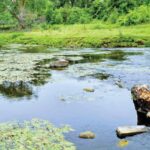
By Aaren Mathison Conservation Technician Many people have historically viewed wetlands as wastelands, believing the only productive use for them was to drain or fill them so the land could be developed or used for production. In reality, wetlands are highly productive and diverse ecosystems that help control erosion, improve water quality, and provide habitat for at … [Read more...]
Well, Well, Well
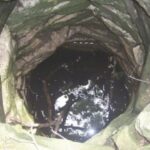
By Kaleb Adams Intern, Fillmore SWCD The Fillmore Soil and Water Conservation District (SWCD) is working to update and improve Fillmore County’s private well inventory with assistance from the Minnesota Department of Health (MDH). This project will verify existing private well locations and assign new, accurate well identification numbers to wells that currently have … [Read more...]
Invasive Knotweed Persists in Fillmore County
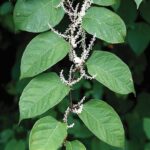
By Peter Mitchell and Riley Buley The invasive plant knotweed persists in Fillmore County. Native to Asia, knotweeds were first planted in North America in the late 1800s as ornamental garden plants. They escaped cultivation and have spread to most states. In their native range, knotweeds are early colonizers after volcanoes with stems pushing through volcanic rock. … [Read more...]
Soil and Water Conservation
By Doug Keene Resource Conservation Specialist If erosion is visible, it exceeds tolerable soil loss limits and it is time to address the issue. We can pay up to $0.90 on the dollar to assist producers with the installation of practices to reduce soil and water runoff allowing you to keep productive soils in place for future generations. In 2025, $213,123 of State and … [Read more...]
Fillmore and Root River SWCD Administer Over $7 Million to Local Producers Implementing Climate-Smart Agricultural Practices
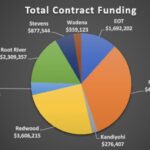
Despite funding pauses and a government shutdown, Fillmore and Root River SWCDs Administer over $7 million to Local Producers Implementing Climate-Smart Agricultural Practices. Fillmore and Root River SWCD have partnered to enroll in a pilot program aimed at increasing the adoption of Climate Smart Agricultural Practices. The Alliance to Advance Climate-Smart Agriculture is … [Read more...]