
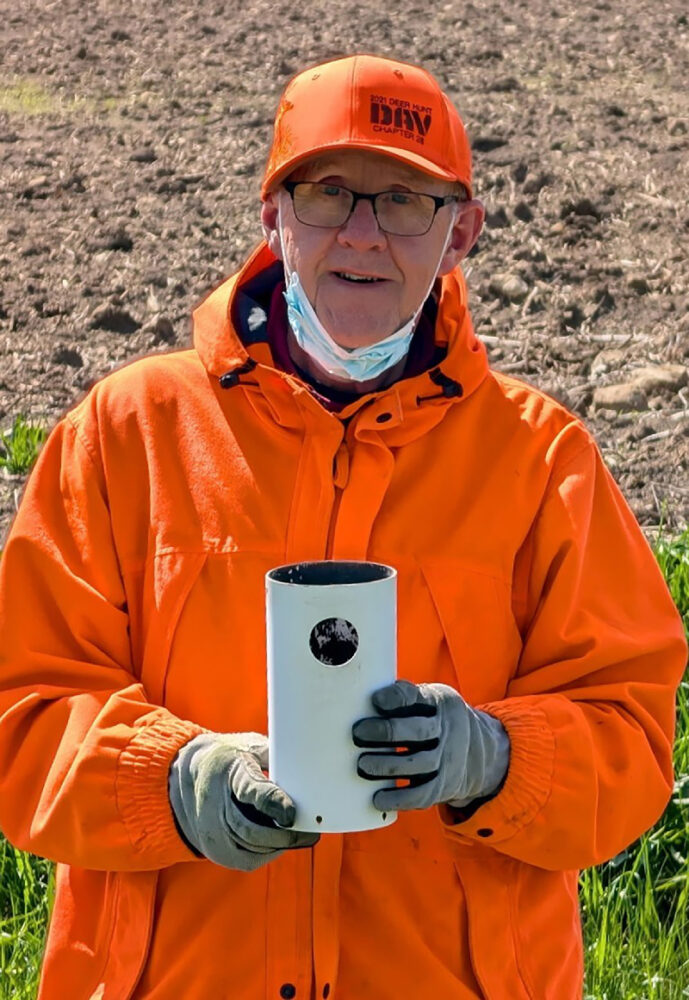
Photo submitted
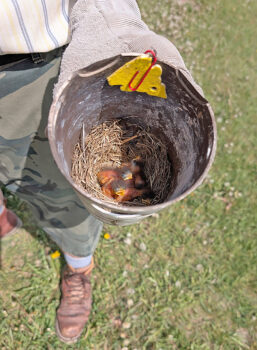
Photo submitted
“I read once that if bluebirds were your neighbors, they would
have the neatest houses, their children would be the best behaved, and they would have the sweetest voices in the church choir,” shared Mary C. Bailey, county coordinator for Olmsted and Fillmore Counties with the Bluebird Program of Minnesota. “That said,” she added, “There is nothing negative about this species, unlike some other species. Sixty-one percent of their diet is insects; they are sometimes called the farmer’s friend.”
Mary was a career teacher in Indiana public schools and for 10 years at Purdue University. She actually remembers becoming interested in bluebirds as a young child, “At about the age of five, I looked out my bedroom window and saw this pretty blue and red bird. That did it!”
Over the years her love for Sialia (the genus name for the three North American species: the Eastern, Western, and Mountain bluebirds) grew. Mary and her husband Bill Bailey, of Chatfield, make an impressive partnership as they care for and introduce others to life with bluebirds.
Mary relates three heartwarming stories about these amazing songbirds:
“My mother lived with me her final years of life; and when she couldn’t get around well, I drove her to one of my boxes on Olmsted County Road 136. I parked the car and brought one of the boxes to her window so she could see the baby bluebirds. It is one of my fondest memories.
“Another lady was celebrating her 80th birthday, and when Bill and I mentioned bluebirds, she said she had never seen a nest. My birds had all fledged, but Bill still had an active one. I drove her there the next day and she was able to walk to the box and see the baby bluebirds. Later, her daughter wrote us a thank you note saying that was the best birthday present her mother could have gotten.
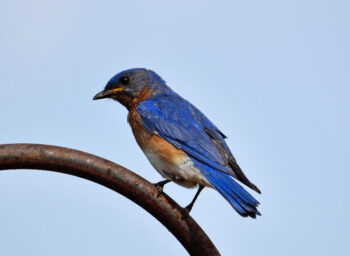
Photo submitted
“My last story is about a man who has passed away. He bought boxes and didn’t install them but donated them to a nature area. The next year he bought boxes and installed them. The first time he checked the boxes, he had a nest with one egg. He called to tell me about this discovery and said, ‘Mary, I have a nest with an egg. I’m hooked. I’m hooked.’ He faithfully checked his boxes even after being stricken with cancer. He checked them during chemotherapy. He was that dedicated. After he passed away, his widow gave me the boxes, and they are now installed at the rural home of a young family.”
It is quite an undertaking to prepare for and fledge bluebirds. Mary wants readers to know, “This is a commitment. You can’t just put the boxes up and sit back. I had to learn this! Just like any other sport, bluebirding has rules. If you follow them, you will be rewarded with the bluebirds in your area.”
Monitoring the boxes is a task to undertake when putting up bluebird houses. “If you won’t monitor the boxes, do not put them up. You will be doing more harm to bluebirds and actually encouraging predator species. I had to learn this one too!” noted Mary.
Important aspects for those who are wishing to attract bluebirds must consider the fact Mary stated, “Bluebirds are very particular about their habitat; but if you have the right habitat, install the right kind of boxes, and monitor them properly, they will come and stay forever.”
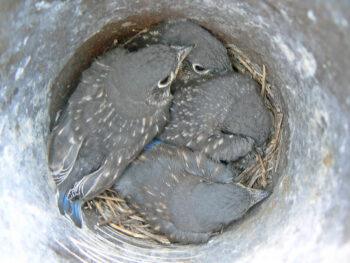
Photo submitted
For nearly 20 years, Laura and Vince Mangan, of rural Spring Valley, have been very dedicated and successful bluebirders. This year they were surprised to discover one nest with six eggs whereas usually bluebirds lay three to five eggs. Laura exclaimed, “Our second surprise was at site 46 where there were five white bluebird eggs! White bluebird eggs are very rare!” Usually bluebirds lay light blue eggs with incubation starting after the last egg is laid, hatching from 12-14 days. Often bluebird pairs have two broods each year, occasionally three.
Bluebird houses should not be put up just anywhere because if placed in the wrong area, they will attract predator birds. This will actually hurt bluebirds and other songbirds. Proper habitat is essential.
An excellent source of information can be found at the Bluebird Program of Minnesota website at bbpmn.org. You may also contact Mary at Marycbluebird@gmail.com to ask questions or address issues you are presently experiencing. In her volunteer position as a county coordinator, she also makes site visits and gives presentations free of charge. Also, each September, Mary and Bill host the Minnesota Bluebirders’ Picnic at their home, so contact her if you want to be placed on the invitation list.
Most importantly, Mary wants readers to know, “If you take on this commitment, it will be one of the most rewarding things you do. It is something you can share with all ages over many years. It is a gift you can give to yourself, to others, and to our environment.”
Leave a Reply