
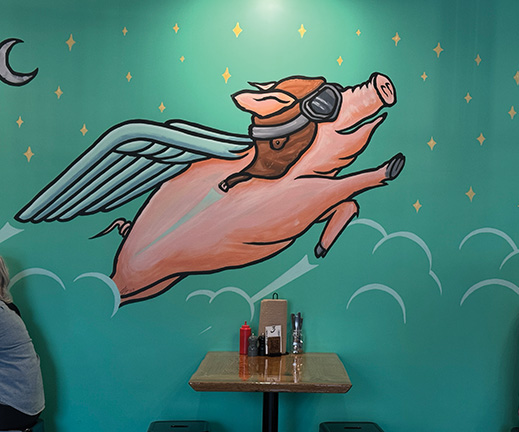
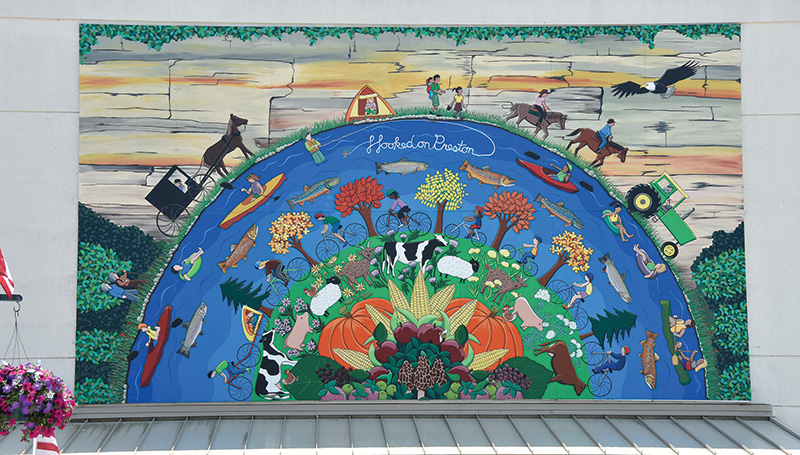
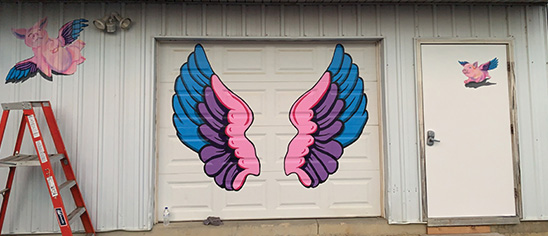
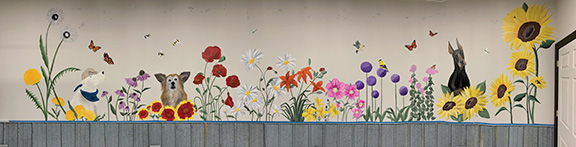
Fall has arrived in Fillmore and Houston counties, making it the perfect time to explore not only the vibrant fall foliage but also the colorful murals that brighten Historic Bluff Country.
The popularity of murals, a vibrant form of public art, is growing exponentially and is becoming increasingly popular in Fillmore and Houston Counties. This summer alone saw four new murals completed in Fountain, Hokah and Caledonia. Residents and visitors alike are discovering that murals provide more than just beautiful backdrops; they spark conversations, create memories, and encourage people to slow down and take in the details of each community, creating a sense of place.
As artist iNO is quoted as saying, “Few people go to art exhibitions. The power of Street Art is that it goes to people’s daily life to be seen.”
The history of murals stretches back 36,000 years ago from the cave paintings of Altamira in Spain, to the petroglyphs of the American Southwest, to Michelangelo’s masterpiece on the ceiling of the Sistine Chapel.
Today, the canvases may be barns, silos, sidewalks, fiberglass sculptures or brick walls, but the purpose remains the same, to preserve culture, spark imagination, and bring communities together.
Successful murals are a result of community collaboration with the artist. Most of the murals in the two most southeastern counties of Minnesota have included members in the design and painting phase.
The surge in mural projects across rural communities is largely supported by grants, such as the Southern Minnesota Initiative Foundation’s (SMIF) Paint the Town grant, donations, and grassroots fundraising.
The impact of murals goes far beyond beautification. Murals revitalize and transform public spaces; build community pride and a sense of place; support tourism and increase local business; and educate, celebrate culture, and advocate for causes.
Murals can now be found in nearly every community in Fillmore and Houston counties. Each is one-of-a-kind, and they each tell a story about the community they are located in.
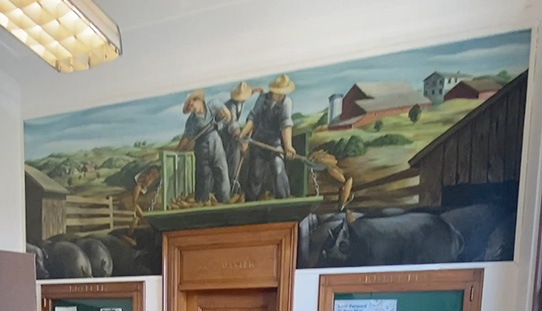
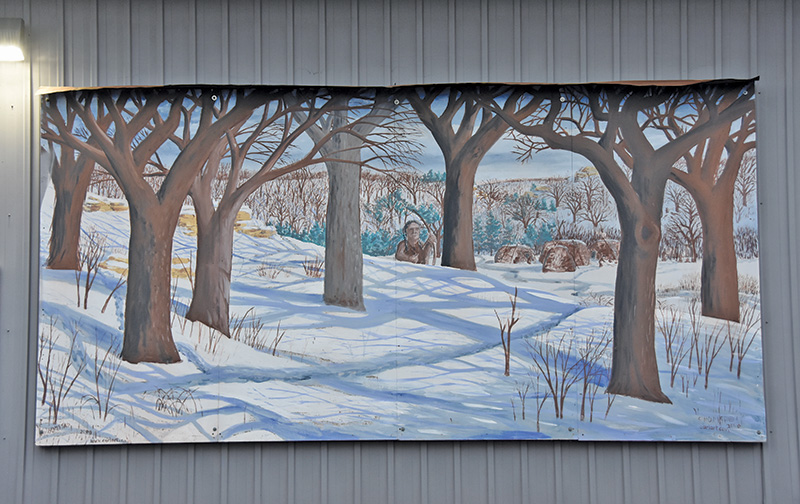
Murals can be found in many places across Historic Bluff County, including government buildings. The Caledonia Post Office houses a historic mural painted by Edmund D. Lewandowski during FDR’s New Deal program in the early 1940s. Nearby, a 3D mural in Caledonia’s pocket park by Sarah Pederson of Coon Valley, Wis., draws viewers into a vivid scene of local plants and animals. Pederson also recently painted the community’s military rock.
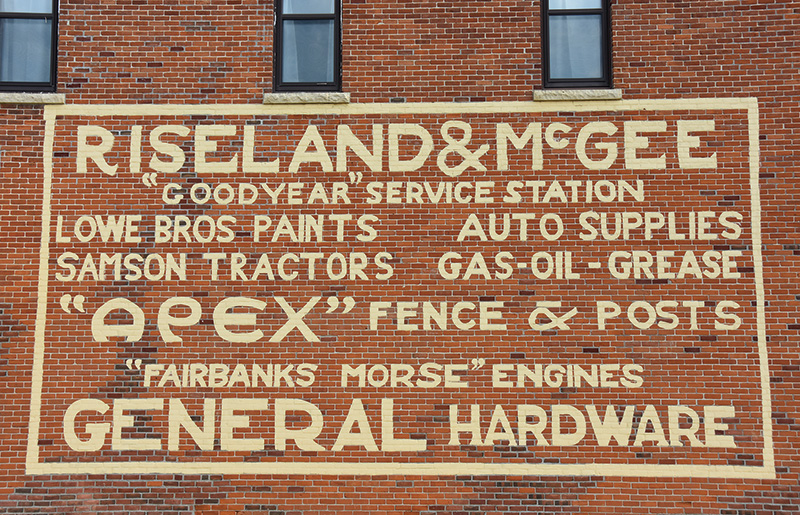
In Harmony, murals range from the past to the present. An advertising mural known as “ghost signs” when faded remains on the exterior wall of Kingsley Mercantile, while a cartoon-style visitor map by Geri Schmeckpeper-Hanson welcomes visitors to take a selfie “in Harmony.”
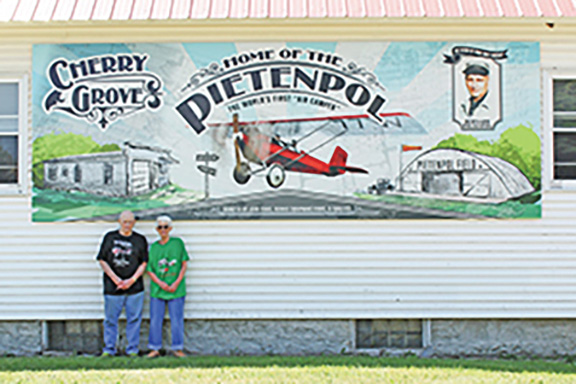
The small community of Cherry Grove was determined to keep its aviation heritage alive. Community leaders came up with the idea of painting a mural honoring the planes once built there.
Fountain completed its first mural, a postcard-style “Greetings from Fountain” designed and led by artist Geri Schmeckpeper-Hanson with help from community members. Images include the Root River Trail, rolling farmland, and sunny skies of southeast Minnesota.
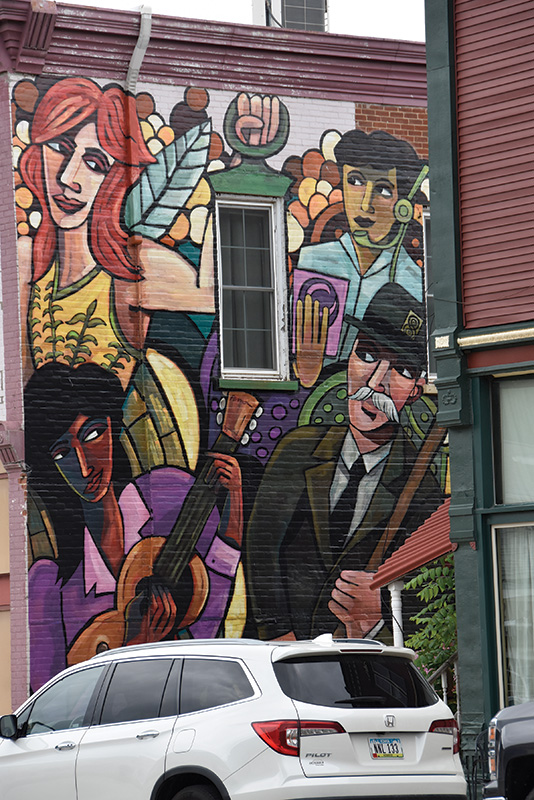
Spring Valley and Lanesboro have joined the growing list of Historic Bluff Country communities using murals to add color, character, and community pride to its public spaces. They both have large colorful murals located on exterior walls of multi-storied brick buildings.
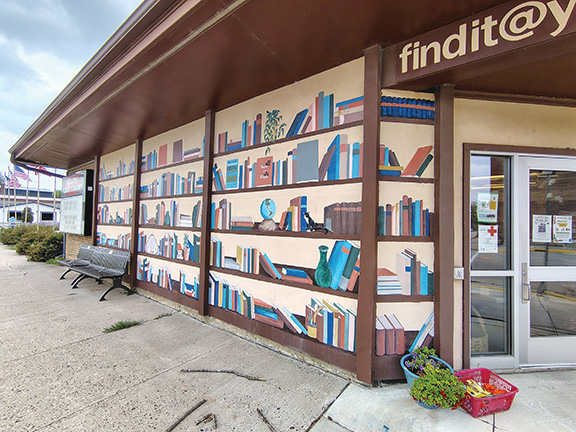
Other towns have embraced murals as well. Hokah and Preston brighten their swimming pools with art. Houston’s library features a striking book mural. Downtown Mabel honors the town’s railroad history and its veterans with patriotic wings at the VFW. Spring Valley’s butterfly wings and Chatfield’s colorful wings painted by Andrea Hindt have also become popular selfie stops.
At Spring Grove’s Giants of the Earth Heritage Center, a mural by Sally DeReus and Doug Eckhaeat comes to life after dark, with a bronze sculpture of Sigmund Aarseth appears to be painting the mural himself. Nearby, former Spring Grove art teacher, Kaley Cross, added vibrancy to the center of town with a colorful creative mural of oversized flowers transforming an unused alley space into a relaxing place to sit and enjoy this “Pretty. Neat. Small Town.”
In the local Mexican restaurant in Rushford, there are two large murals illustrating the landscape in Mexico.
Barn quilts are another form of murals, which can be seen throughout the countryside. Each quilt tells the story of the farm where it is located.
From history, to landscapes, to patriotism, to whimsy, Historic Bluff Country murals continue to showcase community pride, creativity, and stories worth remembering.