
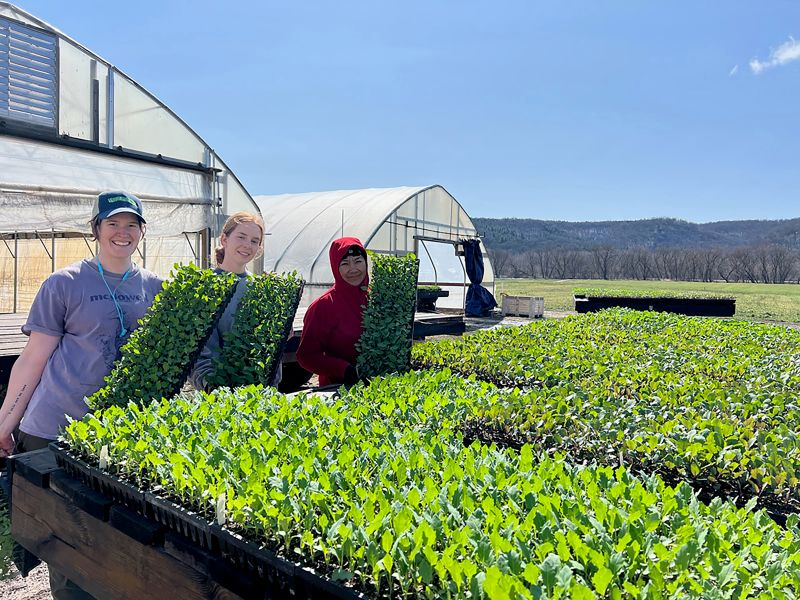
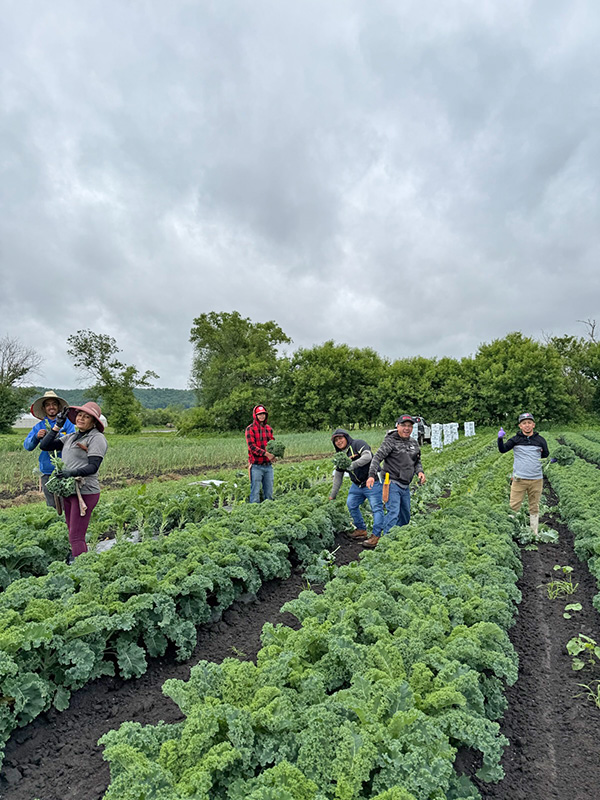
Take a drive through the farmlands of Fillmore or Houston counties, and you’ll see the same few crops: corn, soybeans, maybe some hay. Head west out of Rushford on Highway 30, and just past the cement plant you’ll see something totally different: acre after acre of cabbage, peppers, tomatoes, lettuce, melons, carrots, cucumbers, kale, broccoli, beets, onions, squash – pretty much anything you could find in the grocery store. Foods we all eat, but which are almost never grown at scale here in southeast Minnesota.
This is Featherstone Farm. Featherstone was founded by Jack Hedin and his wife Jenni McHugh, who began growing organic vegetables at the Zephyer Valley Land Co-op south of Winona in 1994. In those days, organic foods were virtually unknown. Jack and Jenny started small and built up a loyal following, benefiting from being in the “right place at the right time. When interest in local, organic food began to take off in the 2000s, Featherstone was ready to meet the steadily growing demand.
In 2007 tragedy struck. The historic floods of that year, in which 23 inches of rain fell over 36 hours, literally washed the farm away. Rather than give up, Featherstone chose to do the exact opposite – rebuild, and at much larger scale. The farm moved to is current home west of Rushford the following season. They added even more acreage in 2010, bring the total size of the farm to 225 acres. About 140 of those acres are used to grow vegetables in a given year.
There turned out to be a silver lining to this move – better soil. The soils of the Root River Valley feature up to eight feet of organic matter over a deep layer of sand. This combination offers both high fertility and excellent drainage, which is perfect for growing vegetables. “If you’re going to grow vegetables, you’ve got to have the best, best soil, and we’ve got it right here,” says Hedin. “We’re really fortunate.”
These days local organic foods have gone fully mainstream, but a farm as large as Featherstone continues to be a rarity in Minnesota. “People don’t understand how complex it is,” described Production Manager Abby Benson. “There’s so many more crops to manage than corn and beans, and so many varieties of each crop. There’s so many more steps during the growing, then you can’t just chop it up and throw it in a truck, there’s storage and distribution and marketing.”
Minnesota’s climate also poses its share of challenges. Our weather patterns are highly variable, and climate change is making that natural variability even more extreme. However, our climate also offers some advantages. One of Featherstone’s signature crops is carrots; what sets them apart from supermarket carrots grown in California is that they experience frost before being harvested. Sub-freezing temperatures trigger the plant to ramp up sugar production, resulting in a far sweeter and more flavorful carrot than one grown under the desert sun out west.
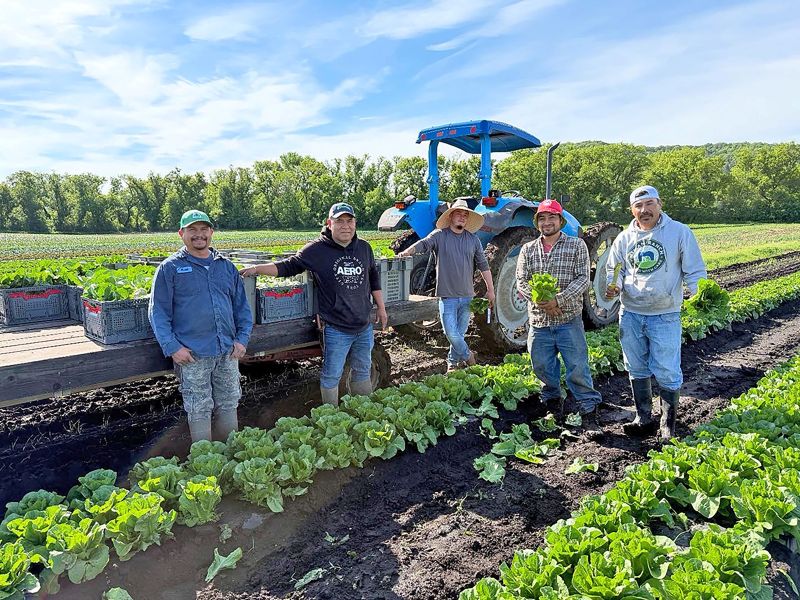
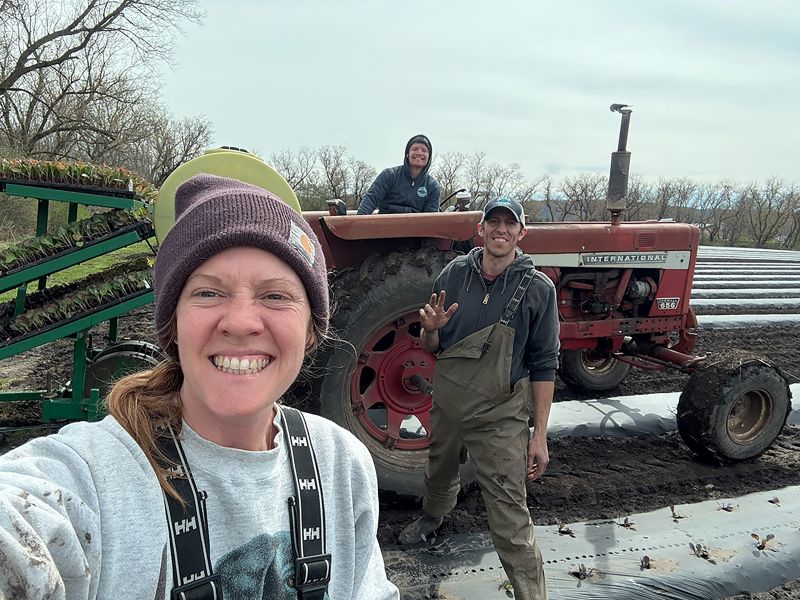
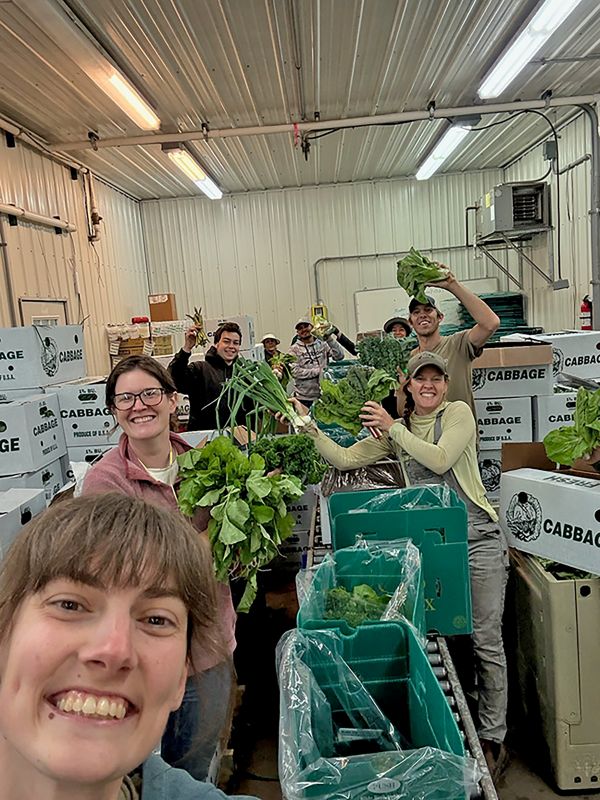
Today, the farm employs about 12 local employees year-round, and about 50 at the height of the growing season. Most of these seasonal employees are immigrants from Mexico, hired through the federal H2A visa program. The H2A program allows a farm to bring in the same individuals year after year, and many folks have been coming to work at Featherstone for a decade or more. As a result, the workers know the farm very well, have a strong sense of ownership and connection, and have become deeply imbedded in the community.
“When things were getting real with immigration, people would comment on Facebook, either so supportive, or very anti-immigrant, chewing us out because they think we use illegal labor,” described Benson. “Just because we have Mexican workers, people think they’re illegal. People aren’t aware there’s a legal seasonal worker visa program. They get fair wages and protections.”
Post-production and Sales Manager James Mabry added that because they are in a rural area, they have not been directly affected by ICE actions. “It insulated us from what’s happening.” But he added, “People are scared, it scared them to go out, seeing what’s happening.”
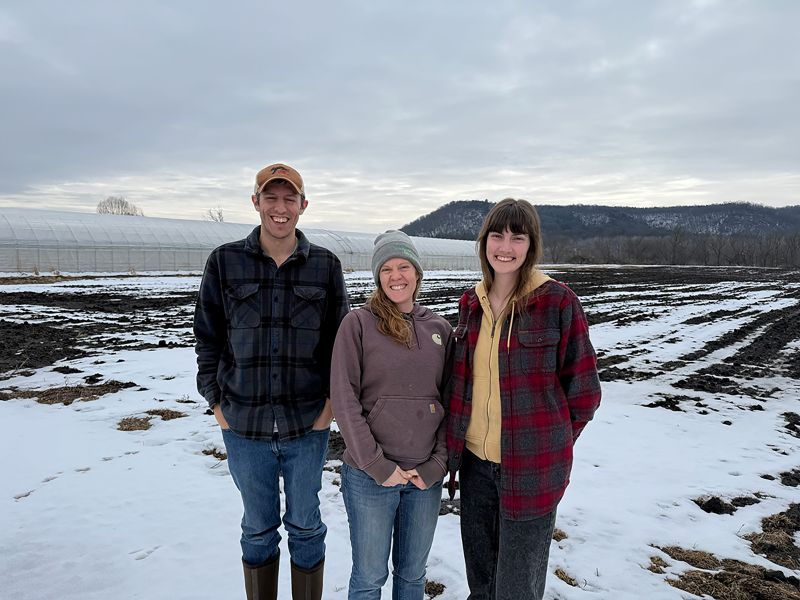
In recent years Featherstone has confronted a problem familiar to so many farmers these days: how to keep the farm going in the next generation. In 2025 Hedin took a major step away from day-to-day operations, handing over responsibility to his core team of long-term employees: Benson, Mabry, CSA Coordinator Nicole Schulz-Smith, and General Manager Nathan Manful. “This year [is] the first time he’s not directly managing anyone here, there were some challenges and some learning curves, but its been pretty smooth sailing for the most part,” said Benson.
Mabry added, “But Jack was always the face and the mouthpiece for the farm. No one wants to do that because he was so good at it.”
Featherstone’s products are marketed through a CSA (Community Supported Agriculture) program, and wholesale. The CSA program (where members pay upfront for a box of produce each week) currently has 1450 subscribers in the summer, 750 in the winter, and 550 in the spring. The farm has a major wholesale account with Whole Foods, which distributes its vegetables to their stores as far away as Chicago. They also distribute to several Twin Cities area food co-ops, and locally to the Winona, Rochester and La Crosse co-ops. Local CSA pickup sites are found at Carly Mae’s in Chatfield, Sylvan Brewery in Lanesboro, and Rushford Foods in Rushford. More information can be found at featherstonefarm.com.
Leave a Reply