
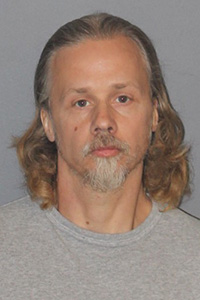
The Minnesota Department of Corrections Supervised Release Board voted 4 to 1 on August 29, 2025, to deny parole for David Brian Engle, continuing his case for another three years. Engle, now 49, has been incarcerated for nearly three decades after being convicted of killing his step-grandmother, 86-year-old Gertrude Bestor, in Fillmore County in 1995.
Engle appeared by livestream from a DOC facility in Moose Lake with his advocate, Becky W., present. Board members listened to him apologize, explain his past, and describe his efforts to change. They pressed him on the brutal details of his crime and asked whether the public could ever be safe if he were released. By the end of the session, a majority of the board concluded he still had more work to do.
Executive officer Rebecca Holmes Larson opened the hearing by reciting the case history. On February 19, 1995, Engle went to his step-grandmother’s home in Granger seeking money. When she refused, he sexually assaulted her and struck her in the head several times, killing her. Bestor was widely known as a kind and caring woman who was active in her community. Engle described her at the hearing as “a pillar of the community, a kind and caring person” who loved her family and neighbors. A Fillmore County jury convicted him of first-degree murder, and he was sentenced to life in prison on June 24, 1996.
Addressing the board, Engle began with an apology. “I’d like to start off by saying that I’m sorry to Gertrude for all the harm and the pain that I caused her that night,” he said. He extended the apology to her family, the community, law enforcement, and his own relatives. He admitted that during his trial he had not had the courage to admit his guilt. “I didn’t have the courage 30 years ago in court to even admit to my crime. I was scared and ashamed. I was a coward. And I’m sorry for that.” Engle told the board he hoped the hearing could provide some measure of closure to the family. He also asked for a transfer to minimum custody, where he could continue programming to prepare for eventual release.
Board members pressed him on how he could commit such an extreme act of violence. For many years, he said, he avoided even thinking about it. “I hid from that because I was ashamed,” he admitted. “I know my offense is very heinous. It’s appalling and disgusting. And I take responsibility for that.” When asked how he could have turned on his grandmother, he pointed to a childhood marked by violence and abuse. He said he witnessed domestic violence in his own home, and in other homes. “I never even heard my mom tell me she loved me,” he told the board. “I normalized that and thought that was how women were to be treated.” Engle said his anger built after Bestor refused to give him money, something she had done for him in the past. He admitted that he carried resentment, which exploded that night. “All that anger, I took it out on her. And she didn’t deserve that.” When asked if Bestor fought back, Engle said yes. He confirmed that she was 86 years old at the time of the murder.
Engle described his immediate feelings afterward. “Ashamed, scared, angry. All I could think about was getting away,” he said. He recalled worrying about a medical alert being triggered and focusing only on escape.
When asked what would make him safe for release, Engle said accountability, treatment, anger management, and support systems were necessary. He said he now attends AA, has support people in recovery programs, and has taken part in restorative justice. He admitted that the public has every reason to be fearful. When a board member asked, “Is it reasonable for people to have fear about the prospect of David Engle going back into the community?” he answered, “Yes. Absolutely.” When asked if treatment programs should erase that fear, Engle said no. “All I can do is continue to work on myself to make myself better every day, to prove to people that this won’t happen again. I’ll work on that the rest of my life.”
Engle admitted to a long history of violence. He said he fought with classmates in high school, often while being bullied. He got into fights at parties while drinking and fought in prison as well. “Anger was a very big part of my life,” he said, adding that low self-esteem also played a role. He told the board he worked for a farmer before the crime, making about $100 a week, and that most of that money went to alcohol. He admitted that on the night of the murder he was intoxicated.
He also spoke about his relationship with his mother. He had described her as abusive when he was younger, but said treatment helped them repair their bond. Now, he said, they tell each other “I love you” at the end of every phone call. He acknowledged that living close to Granger again would not be wise. After reading victim impact statements, he said, he realized it would only cause more pain for the family. “Me returning to that community… that might not be a good idea because I don’t want to create more trauma,” he told the board.
Becky told the board she believes Engle has changed. She said she has known him since they were teenagers and that the person who committed the crime is not the person she knows now. She described him as respectful and said he understands that intoxication was no excuse. “He made the choice to drink. He made the choice to go try to get money. He made the choice to assault her physically and sexually,” she said. Becky said she would help him with reentry tasks if he were released, even offering to let him live in her home if needed.
After testimony ended, the board members spoke about their concerns. One member said Engle’s release plan showed “a lack of empathy for the effect that his crime has had on the community, on the family.” Another said, “I don’t sense that he’s really internalized remorse. I hear him saying the words, but I don’t sense that he’s really grasped the gravity of what he did.”
The commissioner said Engle’s past anger issues did not explain the leap to killing his grandmother. “How he got to the point of raping and killing an 86-year-old woman, it’s a big jump,” he said. “And I would like to test that more.” Another member noted Engle’s low intellectual functioning and questioned whether he could ever fully grasp the impact of his crime. “I’ve worked with emotionally disturbed people before. It’s impossible to totally grasp feelings or express them,” she said. “I just think it’s going to take longer.”
There was also debate over the length of the continuance. One member suggested a shorter delay. “I think his release plan needs a lot of help. But he acknowledged that today, and I didn’t get the impression he was minimizing,” she said. The commissioner pushed back, arguing for more time. “I would err on the side of longer,” he said. “To allow for more testing and to make some moves just to give him some experiences around transition.”
Board member Sheryl Ramstad moved to deny parole and continue the case for three years. “I hear his kind of conclusory comments, and I don’t sense that he’s really internalized remorse,” she said. “I think developing a comprehensive release plan, a realistic plan, and working on empathy are necessary.” The motion passed on a 4 to 1 vote.
The board directed Engle to develop a stronger release plan based in Minnesota, continue restorative justice and behavioral health treatment, and work specifically on empathy. They also told him to expect a transfer within the next three years to test his ability to adapt. Engle asked if he could earn an earlier review by completing directives, but the board denied that request. He remains in medium custody and will receive a written decision.
Engle’s hearing comes as Minnesota weighs the parole and release of other life-sentenced offenders. In 1988, 16-year-old David Brom killed his parents and two siblings with an axe in their Rochester home. He was charged with four counts of first-degree murder. In October 1989, he pleaded guilty. Judge Ancy Morse sentenced him to three consecutive life terms, with a fourth concurrent life term. After more than three decades in prison, Brom was recently transferred to work release.
The Engle and Brom cases show how parole and supervised release decisions in Minnesota balance rehabilitation against public safety. Engle will remain in prison for at least three more years, tasked with building empathy and preparing a credible release plan. Brom, once one of the state’s most notorious juvenile offenders, is now back in the community under supervision. Together, their cases illustrate the difficult choices parole boards face when dealing with the state’s most serious crimes.