
Photo submitted
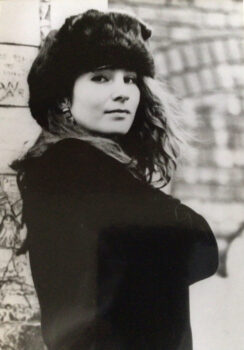
Joining the military wasn’t on Rosemarie Ulven’s radar. Ulven spent her childhood in Spring Grove and later moved to Northfield, where she graduated from high school. As a girl, she danced classical ballet, even being trained by Russian ballet master Ivan Novikoff and attending Interlochen Arts Academy. After attending St. Catherine’s College in St. Paul for a few years, Ulven was awarded a scholarship from the German government to study for two years at the Goethe Institute in what was then West Berlin. While there, she met and befriended a U.S. soldier who was stationed in West Berlin. That’s when the military first entered her mind as a possible career choice. By the time she left Germany and headed back to the United States, her mind had been made up. Ulven ended up taking a substitute German teaching job in Massachusetts for six months, and while she was there, she went to see a military recruiter in Boston. She took the Armed Services Vocational Aptitude Battery, or ASVAB, test in 1987 and was surprised when her score came back very high, high enough that the recruiter had her take the test again, but with supervision. Once again, Ulven passed with flying colors and a high score. The recruiter told her that she would be able to do whatever she wanted in the military with a score like that, but that first she was being assigned to work as a German interrogator because of her knowledge of the German language.
After completing her interrogator work, she was ready to move on. “I had the opportunity to pick any military field I wanted,” she said. “I decided to become one of the first female ‘Batmen.’” She joined the 6988th Electronic Security Squadron, which has a bat on its patch to signify its intelligence and communications surveillance work. Ulven studied Russian at the Defense Language Institute, earning a certificate there and serving as a Russian Airborne Cryptologic Linguist. Among other work, she translated for World War II experts, often involving classified documents. During that time, Ulven was named one of the Outstanding Airmen of the Year for her work and leadership skills. In 1989, she also completed the Special Survival Training Course through the Air Force Intelligence Agency. “There were dangerous airborne reconnaissance missions, which required me to rapidly assist the Pentagon in tracking enemies and hunting them down,” Ulven explained. While stationed at Royal Air Force Base Mildenhall in England, she was sent on a mission during which Soviet MiG fighter jets locked onto her plane to shoot it down. Thankfully, the pilot was able to make it to international waters in time.
One of Ulven’s proudest moments from her time in the Air Force was when her flight supervisor approached her during a flight and handed her a note that read, “Kudos from the Pentagon.” To know that she was helping her country in tracking down enemies was an honor for her.
Unfortunately, during her time in Mildenhall, Ulven suffered a concussion and traumatic brain injury, or TBI, from an accident in her barracks. While she was in the hospital recovering, her commander visited her to give her the news that the U.S. had just invaded Panama to oust its corrupt leader, Manuel Noriega, and restore democracy.
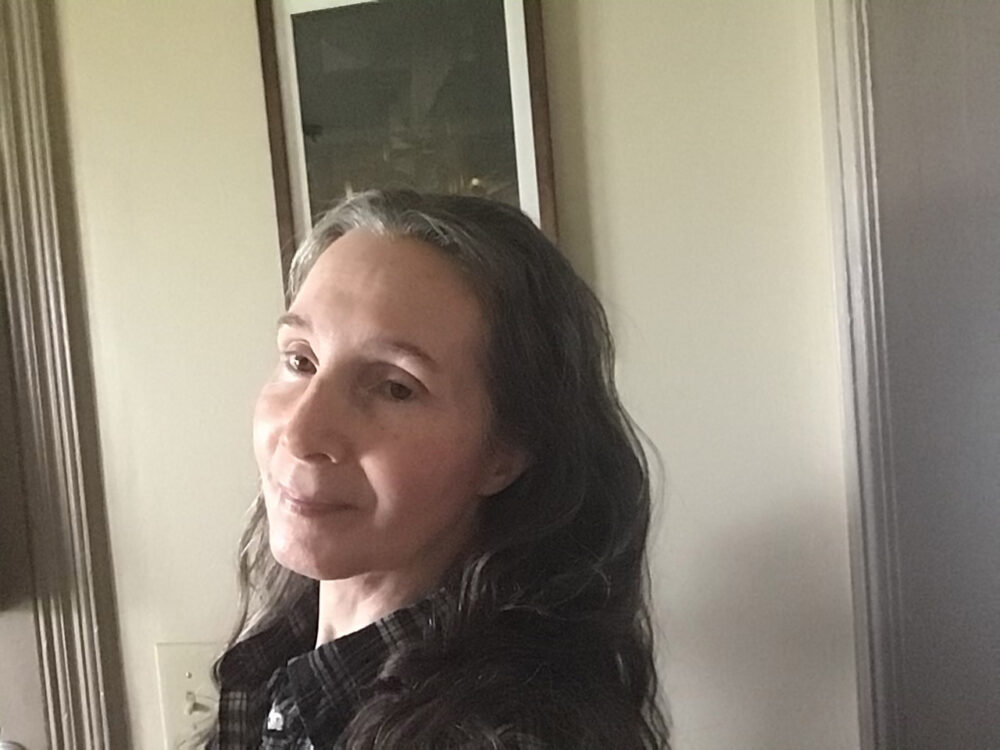
Photo submitted
After the accident, Ulven was left with scars on her face, but was determined to get back to her work. After she got out of the hospital, she took a trip to visit old friends in Berlin because the Berlin wall had recently come down. She still has pieces of it.
In 1990, Ulven was still stationed at Mildenhall when she went to visit her aunt, who lived in England. While headed to the bus after her visit, she was attacked, but thankfully, a woman in a car attempted to ram Ulven’s attacker which scared him off. Her commander later told her that it was being investigated as a terrorist attack. She believes she may have experienced her second TBI during that incident.
In 1991, after four years in the service, Ulven decided not to re-enlist due to her injuries, so she headed back to the states. She spent some time writing, recording and performing music, but her pain was getting worse, so she had to quit that and take a job at a post office in Minneapolis. She wasn’t aware at the time, but her health problems were related to her TBIs. Another TBI occurred when Ulven was in a head-on car crash, which intensified her symptoms even more, leading to her becoming an incomplete paraplegic. While living in Wabasha for a while, Ulven experienced infrasound sickness, which can cause symptoms such as nausea, fatigue, dizziness and more. It exacerbated the symptoms of her TBIs to the point that her doctor instructed her to become nonverbal as even talking was causing the pain to increase.
Today, Ulven lives in Spring Grove again and spends her time working on her watercolor art, which brings her much happiness. Her history as a veteran is something she’s proud of. “Soldiers are not born, we’re made,” she said.
Leave a Reply