
Photo by Isaac Snyder
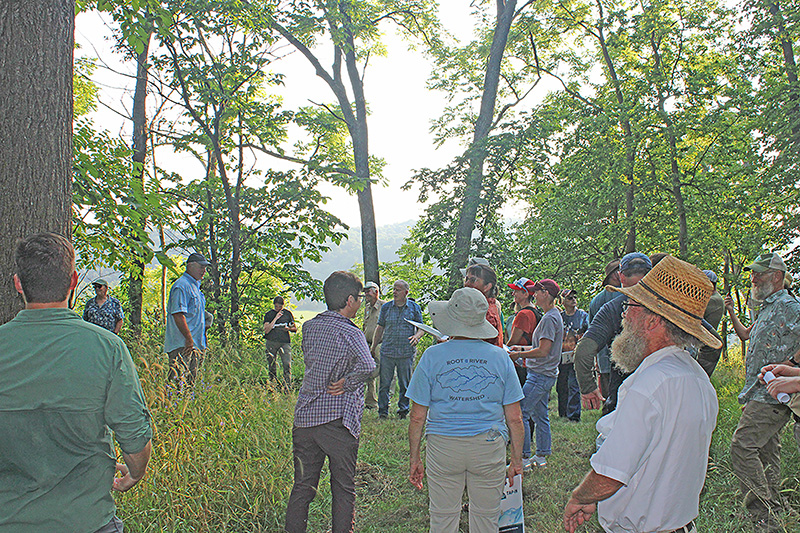
For 15 years, the Fillmore County Soil and Water Conservation District has hosted its annual Forest Field Day and Prairie Walk. This year’s event was held on July 29, at Steve and Diane Snyder’s property, outside Lanesboro. The event displayed forest management techniques, including buckthorn removal, cedar hillside clearing, and native re-establishment efforts.
This year’s event was sponsored by Preston Equipment, the Minnesota Department of Natural Resources, Minnesota Forestry Association, and The Prairie Enthusiasts. Each sponsor contributed by providing educational materials and on-site transportation around the property.
The Soil and Water Conservation District hosts this event for landowners to see forestry and land management practices. According to Aaren Mathison, a conservation technician with the SWCD, native grassland and woodland areas are often viewed as unproductive land, yet they can yield significant value through proper forest management and timber harvesting. By showcasing these methods, the SWCD hopes to help property owners recognize the full potential of their acreage.
In Southeast Minnesota, buckthorn and wild parsnip are two common invasive species that landowners are battling. Aaren said that uncontrolled buckthorn causes two problems. The first is that buckthorn grows quickly and outcompetes native trees like walnut, oak, and maple. Along with that, buckthorn prevents understory vegetation growth which leads to soil erosion in wooded areas. Without active control, invasive species can quickly take over a woodland or prairie and diminish future timber value.
A common problem Aaren has seen is unmaintained or abandoned pastures. Pasture is maintained by cattle, so when they are removed the land quickly gets overrun with invasives. While livestock grazing is an effective way to manage vegetation, landowners must continue maintaining the property once animals are taken off the land. Aaren said, “The worst management is no management,” and to start somewhere even if it’s just a small area.
When landowners Steve and Diane first moved to their property more than 30 years ago, there were no pheasants – a species Steve wanted to see. That inspired him to get involved in native planting and forest management. Steve started by removing unwanted trees and planting native grasses. Buckthorn, cedar, and boxelder were three species highlighted during the walk that had been removed around the property. Today, they have an established prairie and wooded areas that have been heavily cleared of invasive species.
For Steve, the most rewarding part of maintaining the property has been watching native grasses and legumes grow naturally where undesirable canopy has been cleared out. These areas have dormant seeds that had been in the soil for 50 to 100 years.
Steve has planted trees using different methods, having the most success with hardwood seedings.
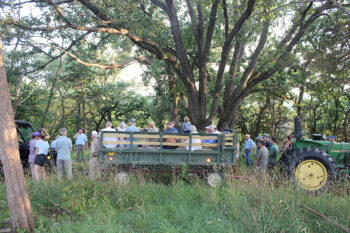
Photo by Isaac Snyder
Typically, the trees that he planted were lost to deer, but with a high density seeding method, the deer and other animals cannot compete. For each hardwood seeding, he planted roughly three seeds per square foot and used a variety of 13 tree species.
Steve’s biggest piece of advice is to only plant native species. Non-native plants will rapidly take over and using chemicals for treating areas like this can become very expensive. Cheaper alternatives like controlled burning in grass and forests are successful options.
In a given area, it takes roughly five years of maintenance to control invasive trees, and a cleared area that is burned biennially can grow multiple native species in under 10 years.
When it comes to maintaining prairie, Steve burns in sections, managing one-third of the prairie every year. This method works well because it creates a cycle: unburned areas provide denser cover, while newly burned areas are easier for birds like pheasants to move through.
This year’s event had roughly 50 attendees. For more information on conservation programs and potential financial assistance, landowners can visit the Fillmore Soil and Water Conservation District website at fillmoreswcd.org. Information on State Cost Share, EQIP, CRP, CREP, and RIM, is available directly on their website.
Leave a Reply