

One night each year, four young sisters on a Houston County farm helped round up roosters. Twenty roosters perished so that that the girls had $20 to buy school clothes on what was known as Dollar Day Sales each autumn at stores in La Crosse, Wis. A blouse cost 50 cents, wash dresses $1 each. Underwear were four for $1. One sister, Anita Lee (Hartmann) Palmquist, would much later write about growing up during the Great Depression era of the 1920s and 1930s. “We did not mind being without money. The neighbors didn’t have any either.”
“Fashion was of little concern,” she noted. Nobody was ashamed to wear mended clothes. After quoting her grandmother, “Patch beside patch is neighborly; patch upon patch is beggarly,” Anita admitted they were often beggarly. High school girls mended by hand the runs in their silk stockings.
Junior high student Anita was proud of her new, 69-cent slip, the only one she had. Before going to school, she would wear an old wash dress under her regular wash dress while milking cows so as not to soil her slip before wearing it to school. Girls did not wear jeans or pants.
Anita repeatedly hand-washed that precious petticoat. But one day when it was hanging on the clothesline, the family puppy attacked it, leaving a large hole. “Mother mended it as best she could, and I wore it the rest of the year.”
Her mother was often busy at a sewing machine until midnight, making over clothing of “more affluent relatives … clever at piecing fabric together when it was scarce. She added trim or ribbons to make the old garments look new.” Tears came to her eyes each time she recalled her mother taking apart her beautiful wedding dress to make a dress for Anita to wear at a piano recital. “There was no money for other material.”
Living on a farm, the Hartmans were able to feed themselves, albeit with simple fare, complicated by seasons of drought. Many townsfolk depended on government food; the children, on their way to school, passed ever-growing government food lines and wished they too could have oranges and grapefruit. But they did own an apple orchard, and the children searched the hills for wild plums and berries, most of which were canned without expensive sugar.
Due to drought, potatoes were small. They cooked the smallest ones, throwing them to the pigs, which also enjoyed surplus pumpkins. Having your wheat ground into flour was less expensive than buying it at a store. With 20 sacks of flour in her bedroom, Anita knew there would be homemade bread.
There was no waste. Store wrappers became school lunch bags. Syrup pails became dinner pails. “Store string would be wound onto balls to be used again.” As an adult, Anita experienced guilt putting crumbs in the garbage, so as her grandmother did, she put them out for the birds.
The drought was worse to the southwest, the Dust Bowl. Anita remembered air in Minnesota becoming dark with dust, said to have blown in from Kansas. “I remember standing on the sidewalk between the house and the milk house,” reflected Anita, “wondering where Kansas was.”
The dust storm made housekeeping nearly impossible. The Hartmans pulled down their tattered green curtain shades. Some folks hung sheets over their windows. Children were enthralled by the sunsets when a “fiery ball of red went down in the west.” But adults feared the grasshoppers devouring crops in the Dakotas would migrate farther east.
The Hartman children learned never say they were bored. “What Dad couldn’t think of, mother could,” she regretfully recalled. The farm day began at 6 a.m. – for everyone. “When I was five, I became part of the corn hoeing brigade. Dad provided a hoe appropriate to my size.” Her three older sisters would reach over into Anita’s row to attack weeds their baby sister missed. But they were unable to save the corn plants Anita inadvertently destroyed. They learned to tell time by the sun. “Our empty stomachs had no plans for working past the dinner hour.”
As seasons changed, so did the toil. “Making hay was no more exciting than hoeing corn. Different muscles became sore.” Daily, they mowed, loaded and unloaded hay to feed their animals during winter. Her dad had tears in his eyes one year at the prospect of having to feed straw to his cattle.
In the hayfields, the children wore their old school shoes with holes where the soles had separated from the leather. Hay stubbles hurt their feet, but there was no money for shoes. Following haying season was the grain harvest. It was not unusual to find rattlesnakes under grain bundles.
About age 10, children were milking cows by hand. Long before age 10, children gathered eggs, fed calves and toted water to pigs and chickens. The most-dreaded job was bringing the work horses in from their night pasture in the meadow. The dew was cold on bare feet, and the horses did not want to go to work any more than did the children. The horses snorted and ran past the gate at every opportunity.
However, by harvest time, the horses had been worn down by hard work and thin despite good care. During the 1930s, with temperatures as high as 114 degrees, they rested the horses during the hottest time of day, resuming work in the evening. Daily, teams of those patient animals pulled plows, disks, drags, mowers, hay wagons and binders for corn and grain. “It was a real tragedy when one of them died,” bemoaned Anita.
Children entertained themselves by hiking the hills, examining flowers, enjoying birds, stars and sunrises, They played games and visited neighbors. They and their parents skated, tobogganed and enjoyed holidays. “Our family built a sense of values, built on love and concern.” When better days finally came, “we appreciated what we had because we had known its lack.”
Source: an essay, “Dig and Delve,” by Anita Lee (Hartman) Palmquist
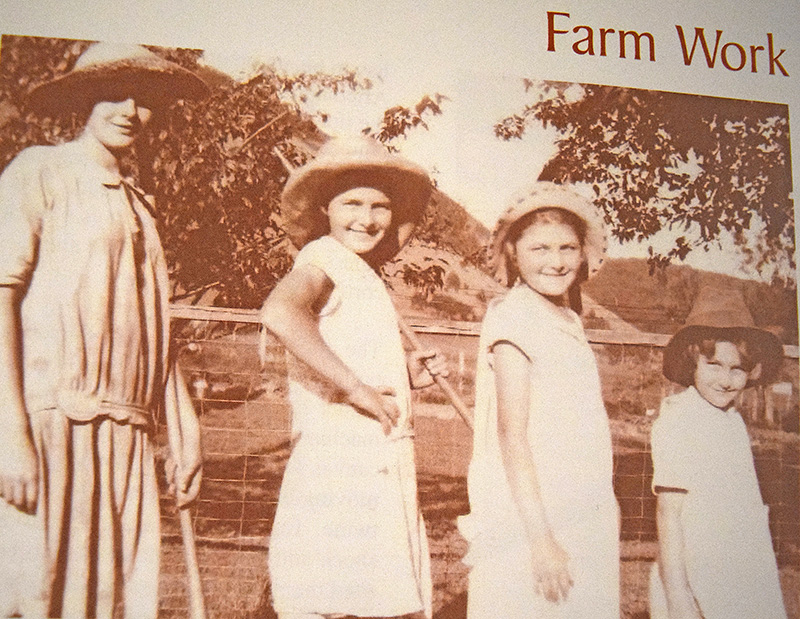
Photo submitted
Leave a Reply