

By Bretta Grabau
Fillmore County Historical Society
Occasionally someone walks into museums with a treasure trove of stories. This happened not long ago when a local resident told me a fascinating story of how a woman from Fillmore County unintentionally found her family in the middle of an international spotlight. It was a thoroughly intriguing story, compelling me to do a bit of research to flesh out more of the details. Because it is such a robust story, it will be split into two sections.
The Cast of Characters
Clara Sethre was born on April 7, 1890 to Hans and Caroline Sethre. She grew up on the Sethre family farm not far from Lanesboro, and eventually met and wed Kristofer Tvedt who had come to the United States from Norway. The couple married on June 15, 1914, but rather than settling down on their own property in Fillmore County or in Kristofer’s native country, they responded to a different calling – the mission field. Shortly after their wedding, Clara and Kristofer moved to Luoshan in Henan Province, China.
Though he was still a Norwegian citizen, Kristofer worked with an American Lutheran Mission organization based in St. Paul. The couple spent 28 years in China as missionaries. During those years, they were blessed with six children, raising and educating them in that country.
By 1917, their service was bolstered when another missionary, Rev. Bert Nelson, based out of Minneapolis, joined them in Luoshan for the next 10 years.
Bert himself was the son of missionaries with several siblings, all of whom were also in China. He had received some education in the United States before returning as the first missionary kid to return to China as a missionary. Bert eventually married fellow missionary, Marie Larsdatter Pihlskog, who died of illness in 1921, about three years later. They had no children. Five years later, Bert received news his father had been killed by a stray bullet in his home in Xinyang in Henan Province. After a sabbatical in the United States in 1928, Bert returned to China in 1929, this time settling in the city of Kwangshan about 25 miles away from Kristofer’s home base.
The Situation
Beginning in 1926, warfare broke out on a large scale in Manchuria, due to the rise of the Communist Red Army fueled by the Soviets. The Red Army’s primary opponent at that time was the Chinese Nationalist Army. This military conflict could potentially account for the death of Bert’s father that same year. The rise of the communists in the Chinese mainland and the conflict with the Chinese Nationalist Army drew the world’s attention for the next few decades. The name of the nationalist’s leader, Chiang Kai-shek, and the leader who defeated him, Mao Zedong, eventually became well-known to people all across the world.
In the midst of the very beginnings of this conflict, foreigners and missionaries were warned there could be danger, but many of them resolved to remain, despite the occupation and destruction. In fact, according to Paul Hattaway in China’s Book of Martyrs, Luoshan and Xinyang are located in one of the strongest Christian areas of that country because of the dedication of the missionaries. Clara, Kristofer, and their friend Bert were among those who were determined to remain regardless of the danger. Then, on the night of October 5, 1930, all their lives changed drastically, turning into a terrifying nightmare catapulting them into an international drama.
To be continued in Part II…
Sources: Find-A-Grave; “China’s Book of Martyrs,” Paul Hattaway, 1996
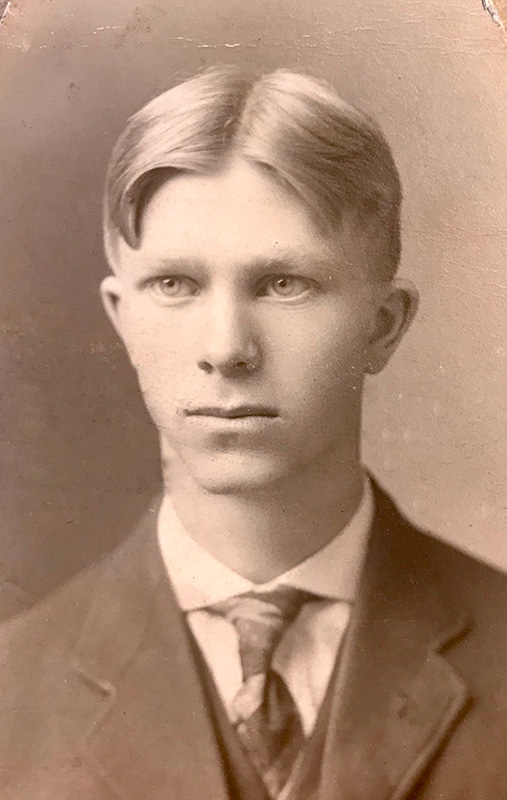
Courtesy of Riva Nelson

Courtesy of Gisholt
Leave a Reply