
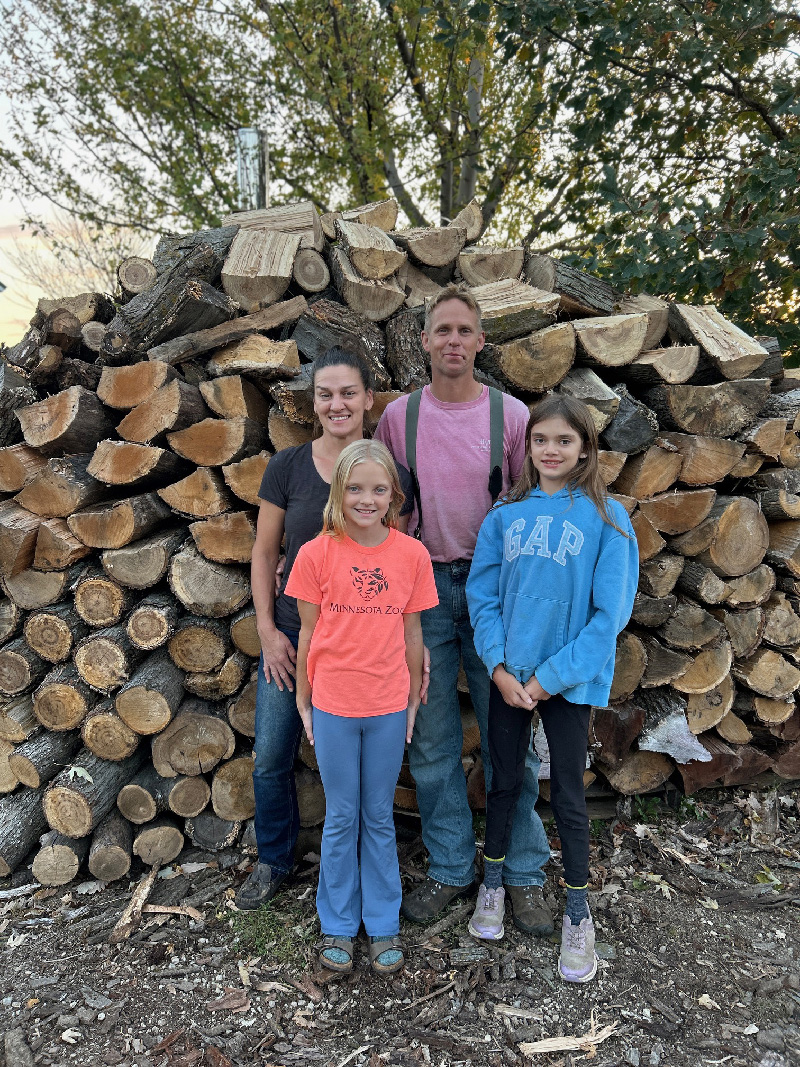
Photo by Wanda Hanson
Johnny Micheel started his forestry business 20 years ago, but he really got his start in forestry long before that. Johnny’s father was a soil conservationist; when Johnny was young, his dad purchased a woodland. Since Johnny could walk, he’s been in the woods, nature’s classroom. Both Johnny and his brother Bob decided to go into related conservation fields — Johnny into forestry and Bob into water and soil. Bob is now the Director of Land Conservation in Monroe County, Wisconsin.
Johnny started Chimney Rock Forestry in 2006. The company provides goat grazing, prescribed fires, logging, timber management, tree planting and installation and renovation of forest trails. He works on management planning and stewardship with his customers through the DNR. Using goat grazing, Johnny does bluff prairie restoration work.
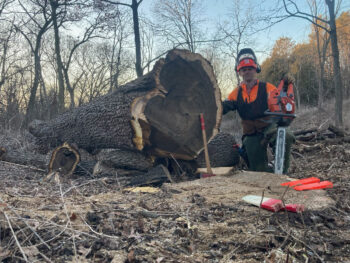
Photo submitted
According to Johnny, the great staffs at the Minnesota’s DNR, the Minnesota Land Trust, the Nature Conservancy and the U.S. Fish and Wildlife Service provide an abundance of help for landowners and foresters. The collaboration between foresters is great as well.
Chimney Rock Forestry contracts with both private and public landowners. In the public sector, the bidding process is used. Private landowners often build a relationship with their foresters that lasts for years.
Tools used in forestry include goats, dozers, skid loaders, skidders and an assortment of hand tools. Johnny likes working with the hand tools best. Working with hand tools, being in the woods and working with landowners is what keeps his work enjoyable.
The company does full lumber harvesting. They appraise the woodland, mark trees to be harvested and do the actual cutting. Johnny also occasionally harvests unique trees for his customers and brings them to his farm’s sawmill to convert them to lumber. This lumber is used to create a legacy to live on in the form of a piece of furniture.
Customers have varied goals. A lot of landowners want to improve white tail deer management. Younger forests are better for deer habitat. Some landowners are interested in timber management; they want to figure out what is right for their land.
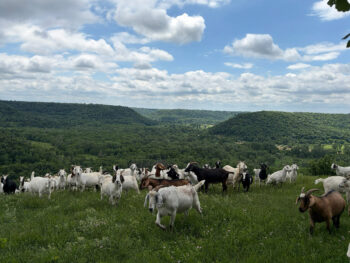
Photo submitted
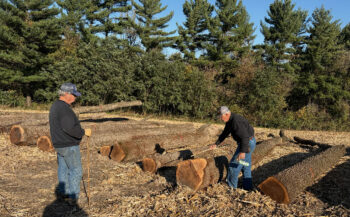
Photo submitted
Challenges for forestry work are the changing weather patterns with rain events now happening all through the year. The changing weather patterns can put stress on forest ecosystems and cause more health issues for the trees.
Many new goat grazing companies have been started; the effect is more competition for Chimney Rock. Some forestry companies are so big that they can easily undercut the smaller companies in the bidding process. A lot of local landowners, however, prefer to stay with a small company with which they have built a relationship.
The forestry business has grown a lot, according to Johnny. He attributes some of this to Covid. The pandemic lockdown reinvigorated people’s interest in the outdoors. Johnny laments the fragmentation that has been happening with farms as people sell the crop land to one party and the woods to another for hunting. The new owners of the woodland areas, however, often want and need to learn more about forestry.
Timber prices are affected quite a bit by the economy. Native hardwood prices have been soft in recent years. The prices were actually better 20 or 30 years ago. There are no papermills nearby so the lower quality woods have no good markets available in the area.
Chimney Rock Forestry changes the land in several ways. Invasive species management of trees and woody brush clears the land so native species can flourish. Logging projects leave the good trees to make a better forest. Prescribed burns enable native flowering plants to reclaim the land. Encouraging the conditions that allow trees to propagate is the most important part of forestry.
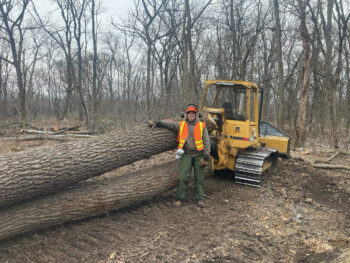
Photo submitted
Bluff prairies and prairies need attention about every three to five years. These high maintenance, “disturbance-dependent” habitats hold some of the rarest and most endangered plants.
Currently, Chimney Rock Forestry employs three part-time seasonal workers who work two or three days a week. Johnny collaborates with his nephew Cody as well. Cody had worked for Johnny in the past, but now has his own forestry business.
When Johnny first began Chimney Rock Forestry, he had more employees and traveled farther away. He found that he was becoming a project manager while he actually preferred working with his hands.
Johnny prefers to stay closer to home now that he has children. His daughters Emma, age 13, and Abby, age 11, help with prescribed burns by lighting fires with drip torches and watching the fire breaks. At this time, Johnny spends most of his time in Southeast Minnesota, as well as in Iowa and Wisconsin. He has worked as far south as Missouri.
Johnny commented, “Forestry is an ongoing thing, a lifetime of management if you’re doing it right. You’re looking ahead to the next generation.” As an example, he shared that he was currently harvesting trees on a farm near Whitewater State Park. The farmer and his wife had planted those trees themselves in the late ‘60s.
Leave a Reply