
 By Lee Epps
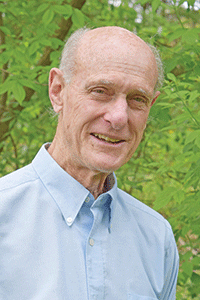
The “well-to-do” would have a four-seated buggy for warmer weather and a one-seated “cutter” with sled runners for winter travel, as well as a horse to pull either. “The rest of us walked,” said Mervin Dvergsten about his 1920s boyhood on a farm at the edge of Spring Grove, Minnesota.
His Norwegian immigrant father walked to the east side of town where he did carpentry work, often constructing houses, sawing each board by hand. He worked for a man that Mervin remembered being often inebriated, which left most of the work up to his father. When there was no school in summer, Mervin and his sister would walk into town with dinner for their father, so he wouldn’t have to walk home for it.
The Dvergsten family had some chickens, a couple of pigs and anywhere between three to five milk cows, which were milked twice a day by hand. Mervin’s mother was the main milker, but young Mervin and sister Julia sometimes drew milking duty, too. “Hard work!” he emphasized. “We sat on a wooden stool and let the cows wave their dirty tails in our face – Ish!”
The milk was set aside so the cream would rise to the top. A separator was a machine that separated the cream from the milk. It was the kids’ assignment to turn the handle on the separator, which Mervin assured was “really hard work.” The skim milk was used for cooking and also fed to the pigs.
Some cream was put into a butter churn, another burdensome, hand-cranking task for the children, who would watch a glass on the side of the churn. When the contents turned from white to blue, it meant the butter had separated from the buttermilk, and that ordeal was over until the next time. His mother would shape the butter and place it into a covered dish and take it down into the cellar, a dirt-floor basement, to keep it cool.
Some cream was used for “cream and bread” and to add to coffee. Mervin informed that folks did not drink their coffee black in those days. Other cream was picked up and tested by the cream hauler, who took it to the creamery, which paid the family according to the test of butterfat. There were those who thought the creamery owners were accumulating wealth while cheating the farmers with the test results.
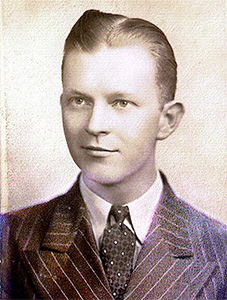
Photo submitted
Mervin remembered many times walking to the creamery with a gallon pail to purchase buttermilk for five cents a gallon. In that era before refrigeration, milk and hand-churned butter were kept cool in covered cans lowered into a cistern. They hired someone with a team of horses, a wagon and a tank to haul water from the Spring Grove water tank to dump into one of their two cisterns.
The other cistern received rainwater from eave troughs. There was a two-way outlet from the down spout so that water with dust and bird droppings from the roof could be directed onto the ground before cleaner water was directed into the cistern. There were times when someone forgot to turn the lever, and the first dirty water went unintentionally and unfortunately into the cistern – “ish, pew, ugh!”
The town water was used for drinking and washing clothes. There was a pail and washstand in the kitchen for cleansing hands and faces. Another childhood chore was hand pumping water into the pail and carrying it inside to the washstand. The “dipper,” used to get water into the wash dish, was also used for drinking – by the whole family.
Washing clothes required labor from the entire family. Mervin’s father would go into the woods, cut down a tree with a large saw and then cut the logs into lengths that could be loaded onto a sled. He would have a saw rig come out and cut the logs into approximate 16-inch lengths, which would be chopped and split into firewood for the stove.
He did not cut a tree each time clothes were washed, but the wood was stacked in the woodshed and also used all winter for heating, cooking and washing. “We kids carried armloads of wood and dumped it into the wood box by the stove and carried out ashes for the garden,” reported Mervin.
Beside the wood box near the stove, there was a can of kerosene in which corn cobs were soaking. A corn cob would be lighted and placed into the fire pot of the stove and covered with split wood to create heat for washing clothes.
“Next, we got the old oval boiler out and carried water from the pump and poured it pail by pail into the boiler. When the water got hot, it was transferred into two round wash tubs, and Mom got out the wash board and went to work with the soap that she had made of home-rendered lard and lye.”
Mervin’s mother also made beer. He remembered her boiling hops and using malt. The finished product was put into fruit jars and also in a wooden keg with a spigot. The cellar had only an outside entrance. Mervin often heard the banging of that cellar door when his father would have walked home from a day of sawing and hammering and gone into the cellar for a glass or two of mom’s beer before supper. Mervin said that refreshment had “no alcohol to speak of,” and that he liked it, too.
Carpentry and house construction was not a 12-month proposition, but Mervin’s father dealt with wood in the winter, too. In the woods below their home, he cleaned out brush, scrub trees and deceased trees. It lay below a steep hill where the children would descend on skis.
The next Fourth of July, it was a perfect place for the family to welcome their relatives for a holiday picnic celebration. There was a cold spring, ideal for keeping the lemonade cool. (No mention of beer)
Source: Thoughts of the Past, by Mervin P. Dvergsten as recorded by hand between 2000 and 2003, typed by Beth Dvergsten Stevens.
Leave a Reply