
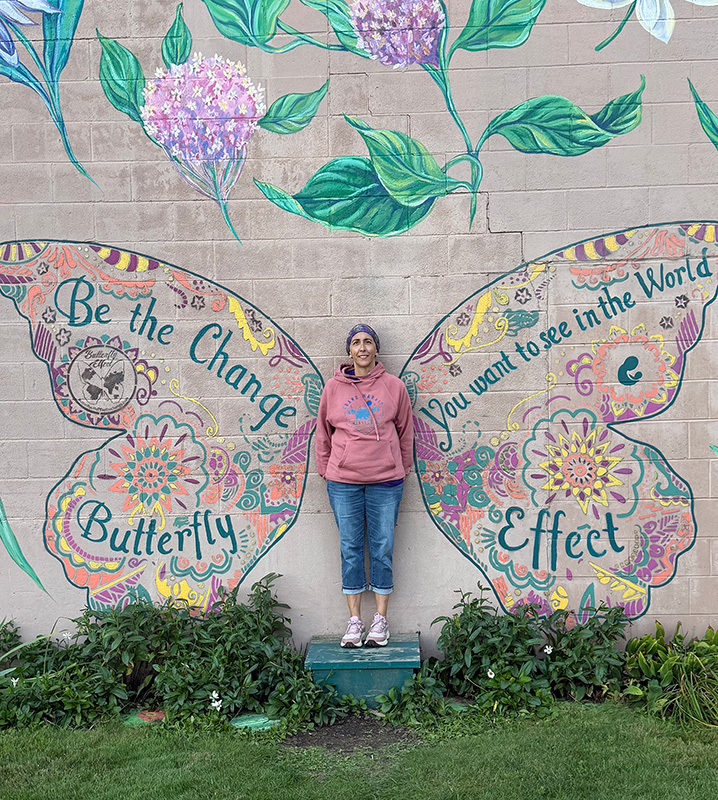
Photo submitted
For Naaren Kingsley, life was following a familiar path. She and her husband Travis own Caledonia Veterinary Clinic and work together while raising their three children: Noah, 24; Priya, 21; and Avery, 18.
When Naaren was diagnosed with breast cancer in April, her youngest child was a high school senior. The family was busy navigating basketball season and preparing for graduation.
Then came an unexpected diagnosis that changed their plans.
“I really didn’t have any symptoms,” Naaren explained. “I got diagnosed on a routine screening mammogram, which I’ve gotten every year since I was 35 years old because my mom had breast cancer – coincidentally, at the same exact age that I am now.”
Because of her family history, Naaren had been diligent about getting annual mammograms. However, she had never gotten a breast MRI.
“In hindsight, I think I should have,” she said. “If you have dense breast tissue, you can ask for a breast MRI because a regular mammogram might not pick up things.”
Naaren had her screening mammogram on a Friday and returned the following Tuesday for biopsies. Doctors also discovered a suspicious lymph node, which tested positive for cancer. Her diagnosis was stage 2B breast cancer.
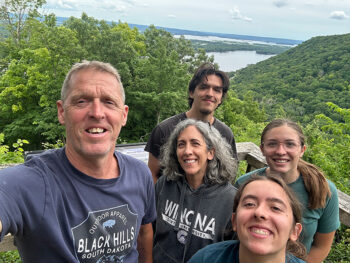
Photo submitted
For a time, there was concern that the cancer might be stage four after a PET scan showed suspicious activity in her chest lymph nodes. She underwent two additional biopsies before doctors determined that the cancer had not spread that far.
“That was a pretty stressful time for me,” she said.
“I wasn’t surprised, but I think the fact that it was in a lymph node scared me more than just, ‘You have breast cancer,’” she said.
Despite the challenges, Naaren has tried to maintain her usual routine as much as possible.
“We still did everything we were planning on doing this summer, minus one vacation,” she said.
“The one thing that helped me is not slowing down, not sitting at home,” she explained. “I did take a leave of absence and sat home for a few days and realized that was horrible for me and my brain.”
Naaren underwent a double mastectomy, during which doctors also removed the affected lymph node. She was at the hospital by 5 a.m. and home by 4 p.m. the same day.
She began chemotherapy in August and is undergoing four rounds of treatment. Radiation treatment will follow, along with monthly injections to “shut down my ovaries.” After the radiation, she expects to take oral medication for five to ten years.
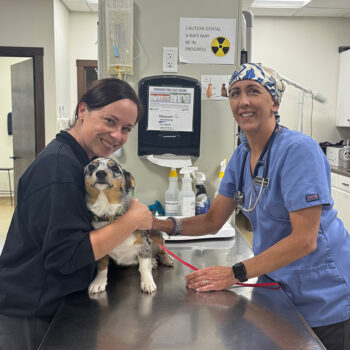
Photo by Charlene Corson Selbee
Her cancer, which is the most common type of breast cancer, is fueled by estrogen, which is why they’re trying to shut down her estrogen production.
“It’s a lot,” she said.
Although treatment has left her physically exhausted, Naaren continues to work.
“I have chemo on Monday, and by Thursday or Friday, I feel really bad. Then they wait another three weeks before they do it again, but it’s really tiring. I go to bed very early now.”
For Naaren, some of the hardest parts have been emotional rather than physical.
“The hardest part of it is the mental aspect – being scared because you have cancer, losing your breasts and having surgery is mentally hard. Losing my hair,” she said.
Physically, however, she said she has not felt as bad as she might have expected.
Losing her hair has brought an unexpected collection of colorful scarves.
“So many people have been giving me scarves. I have so many. I have some really fun ones,” she said.
Throughout treatment, Naaren has relied on her husband Travis and their children. Travis has accompanied her to nearly all her appointments and helped at home. One of her daughters, who can work remotely, also spent much of the summer at home.
 Support has extended well beyond her immediate family. Friends and community members have sent text messages, called, mailed cards, delivered gifts and followed her CaringBridge page.
Naaren said those gestures have made a meaningful difference.
“I think that people should know that all of that is so important,” she explained. “I would like those people to know that, no matter what you do, reaching out is the most helpful thing.”
“It’s never not a good idea to reach out to someone and tell them you’re thinking about them,” she said.
“Try to live your life as normally as possible while you’re going through treatments,” she advised.
“Get your mammograms, and if you have dense breast tissue, ask for a breast MRI,” she said. “You have to be proactive about your own health, because sometimes the providers don’t do that for you.”
Leave a Reply